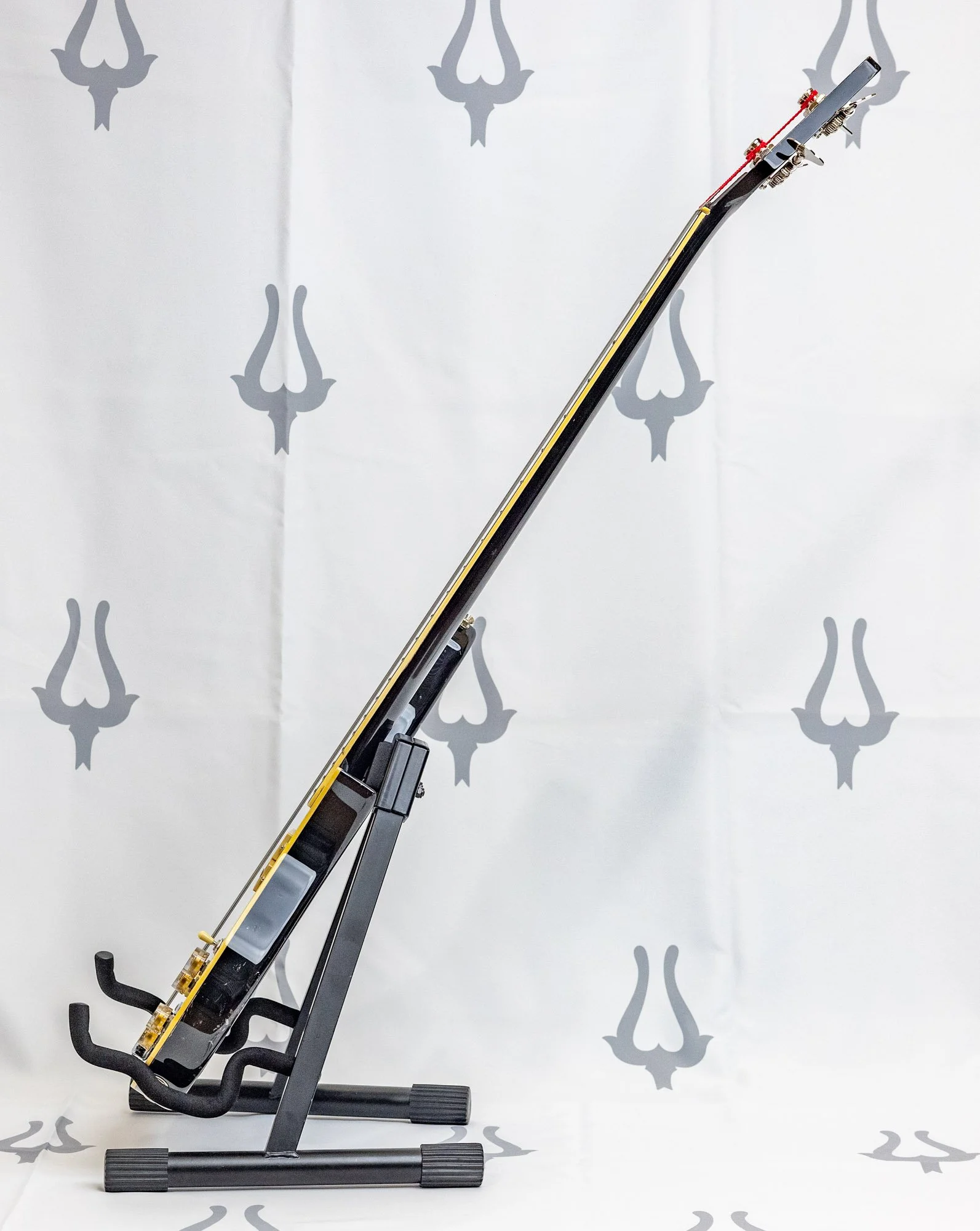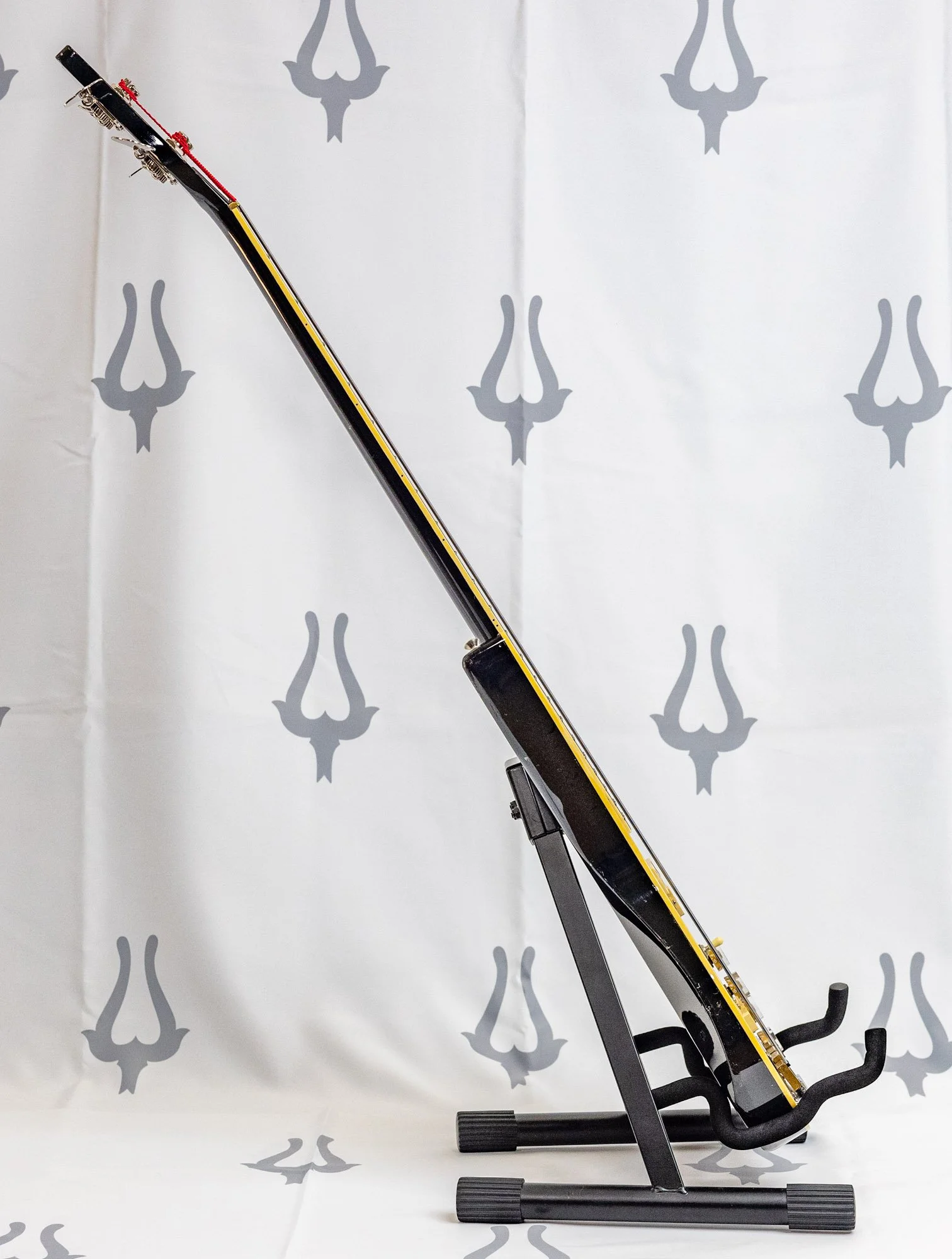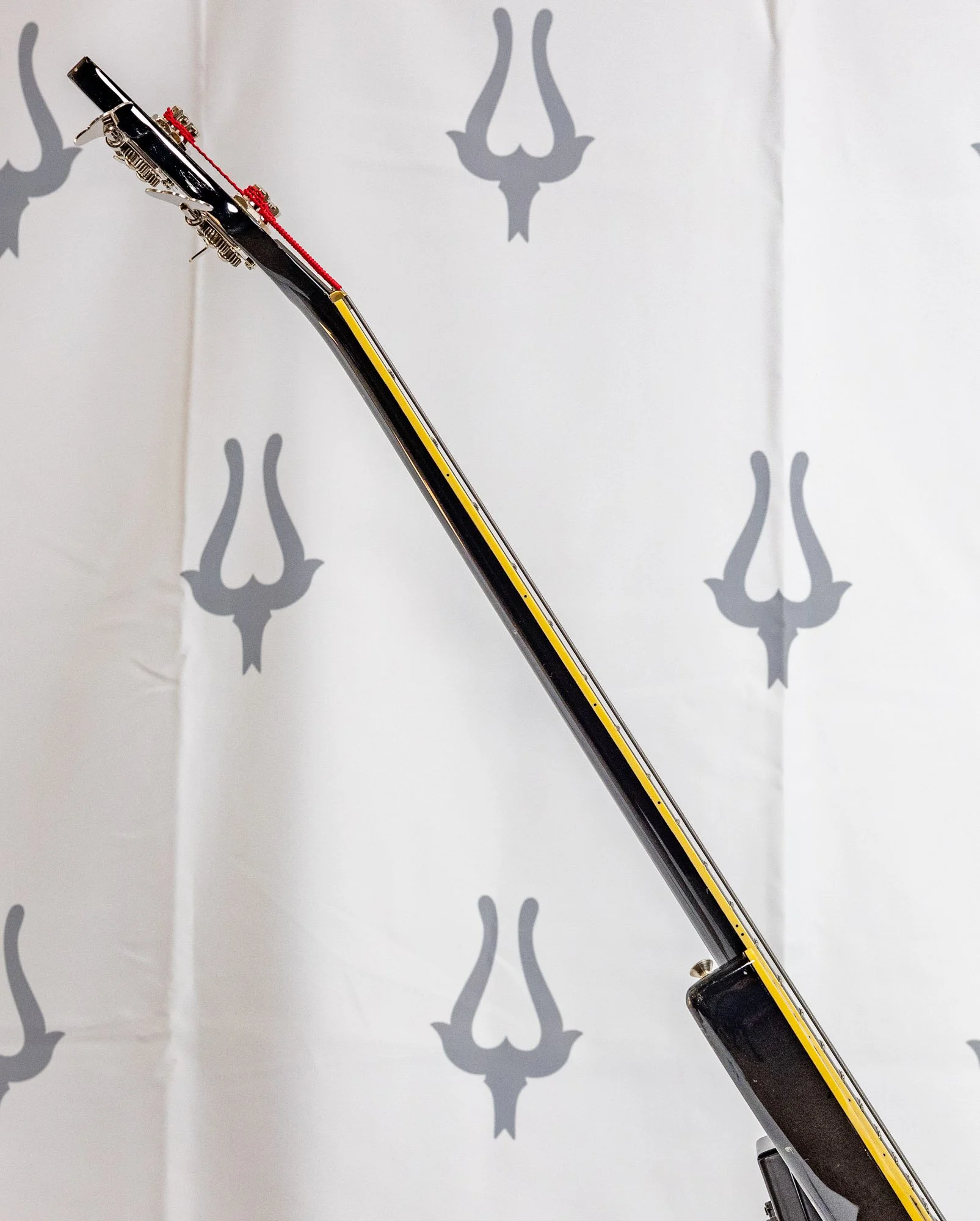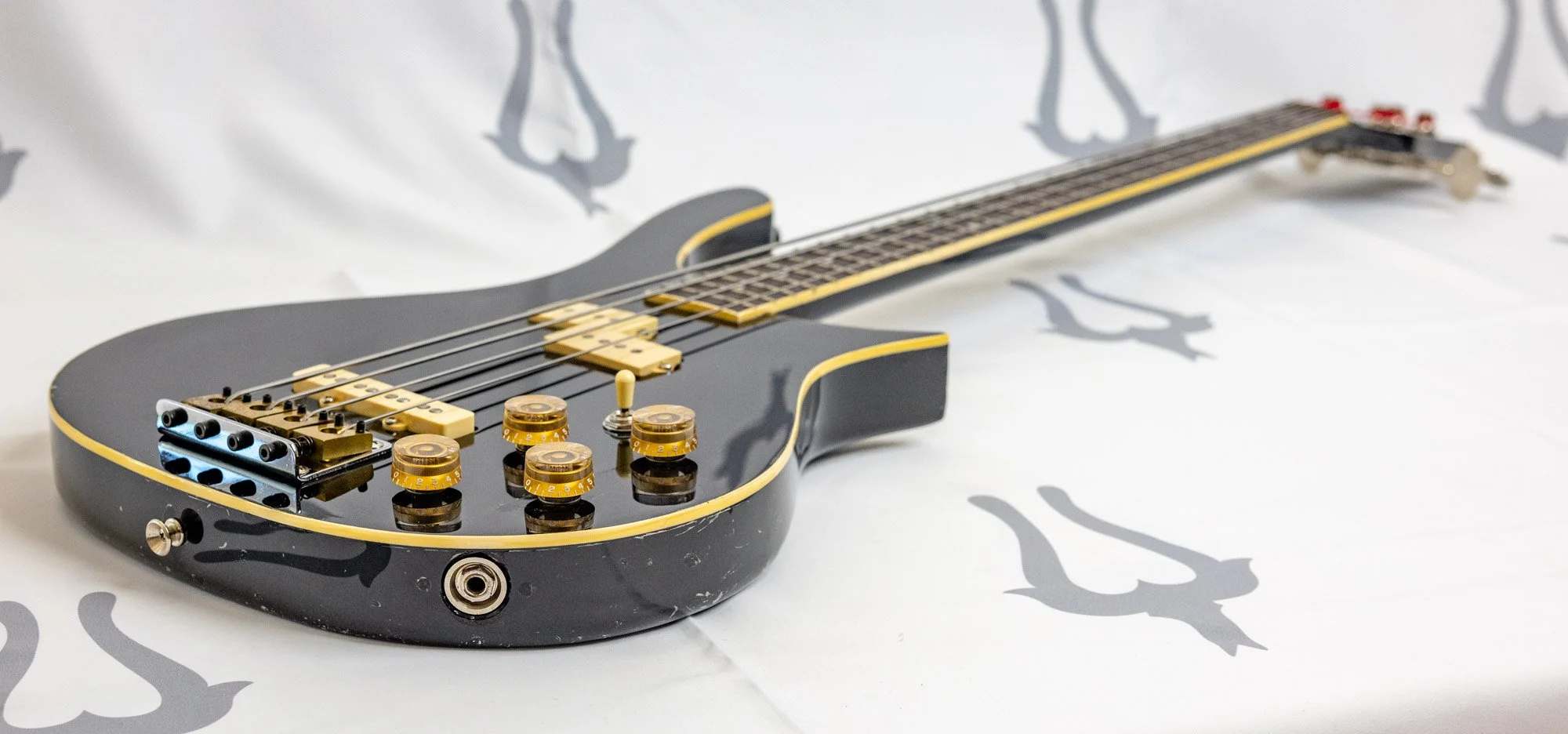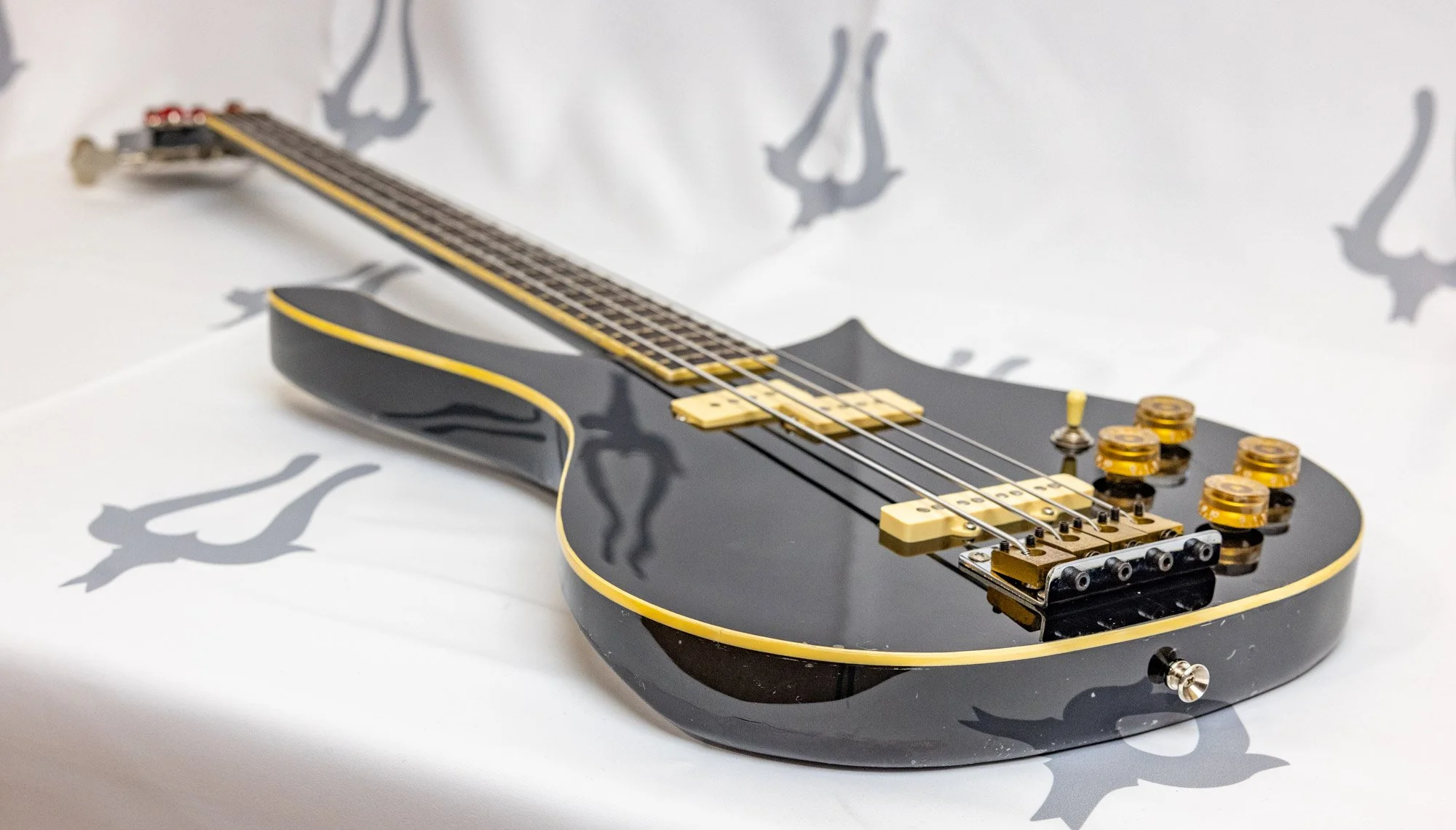
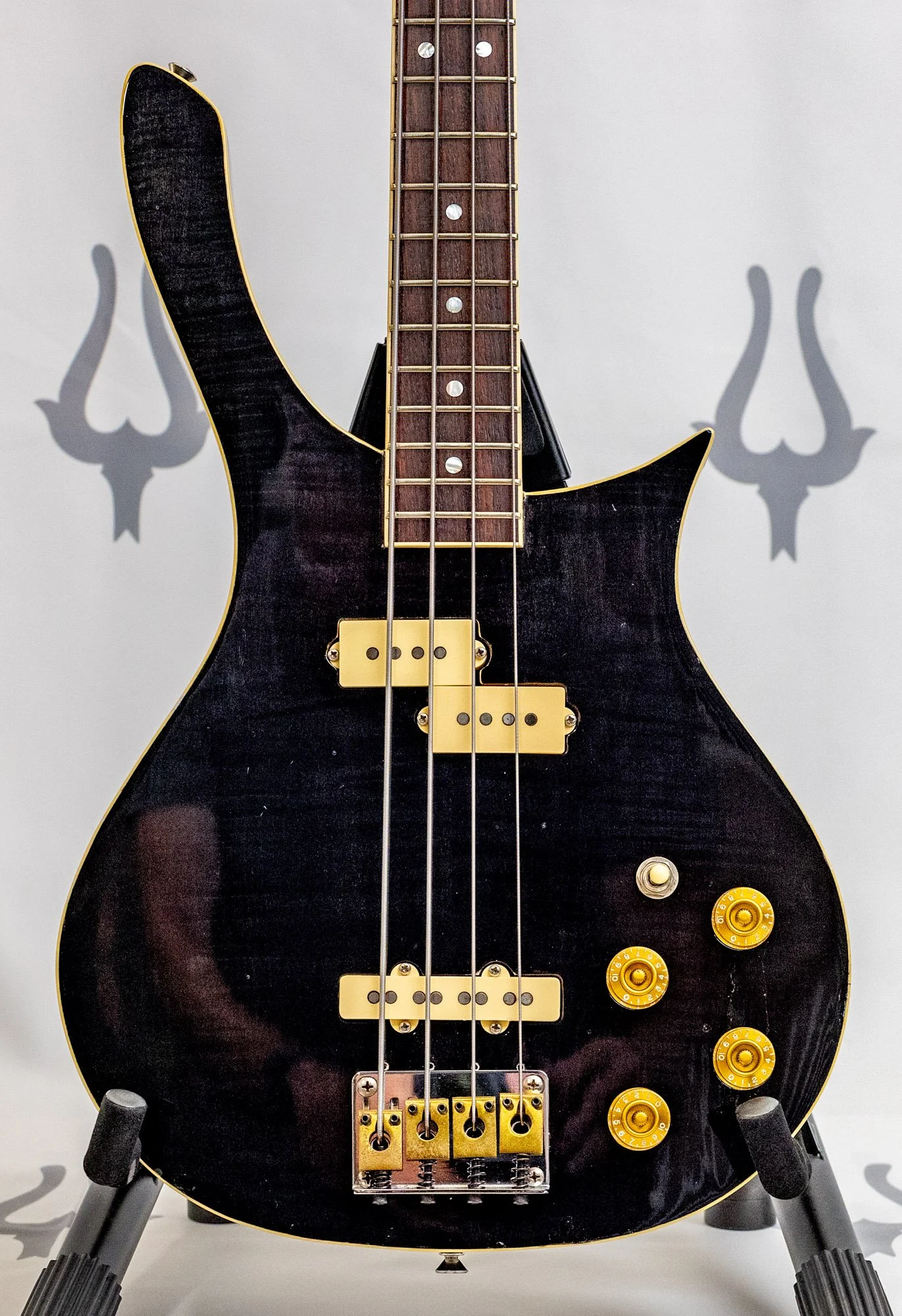
Washburn SB-50 Condor
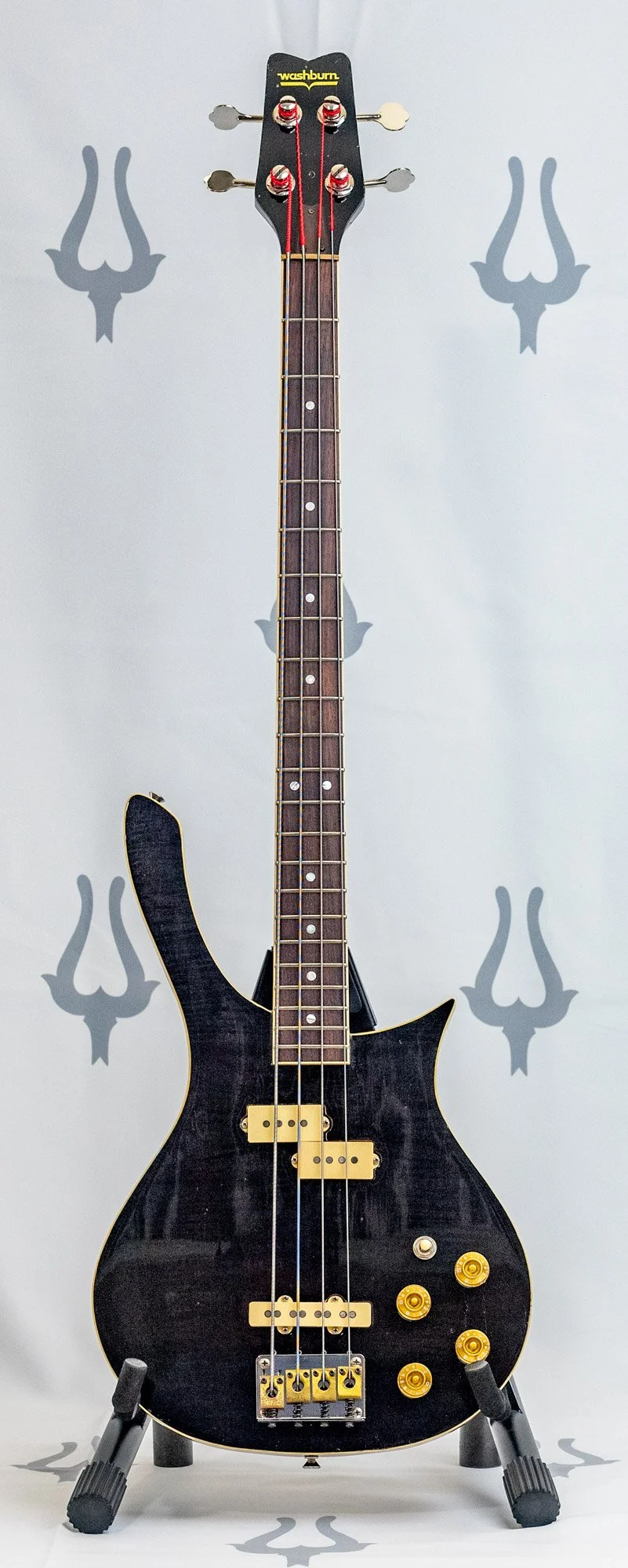
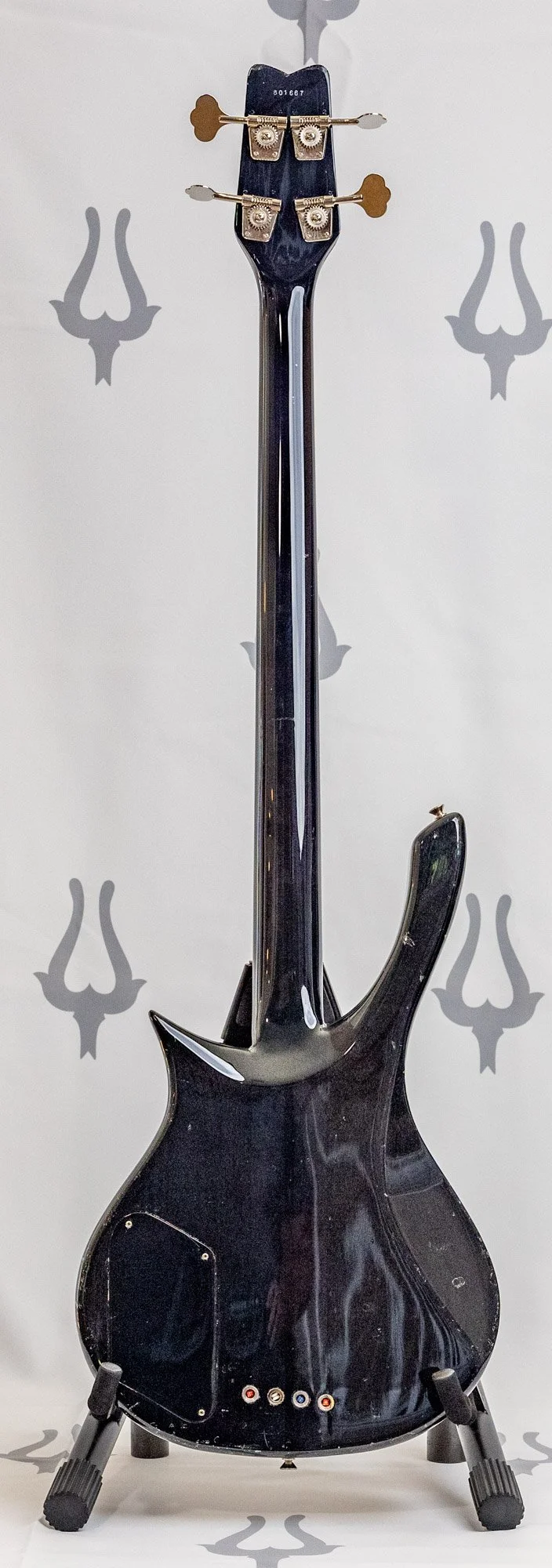
Washburn SB-50 Condor
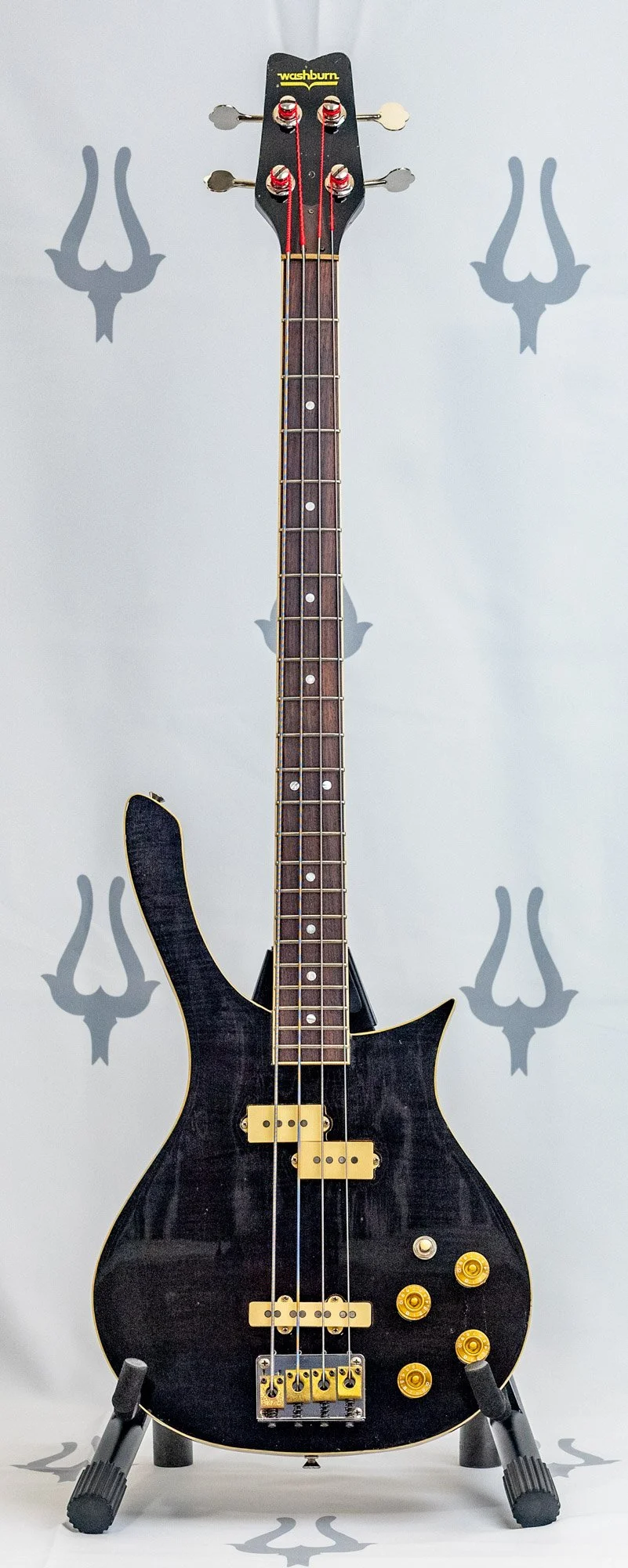
This is a rare bird (pun intended)! The only advertisement with a picture of the Condor that we have found is from Sound International in October 1980 (pictured below), where it is shown as a future model, but not named. The Japanese Washburn Catalog and Price List from 1980 and advertisement below mentions the model SB-50 “Condor,” but the bass pictured looks more like a higher end version of the Vulture II (with gold hardware and maple curved top). The SB-50 does look like it was the basis for the Yamaki branded Mark XX-B from 1979-80. Note that the price for the SB-50 Condor is ¥100,000 - making it the most expensive electric Washburn for that year. Even more than an Eagle!
So, is the bass on this page called a SB-50, Condor, or something else? We don’t have a picture of it from Washburn with the model name listed. It’s still a bit of a mystery. The online community calls this model a Condor, so we’ll go with that for now.
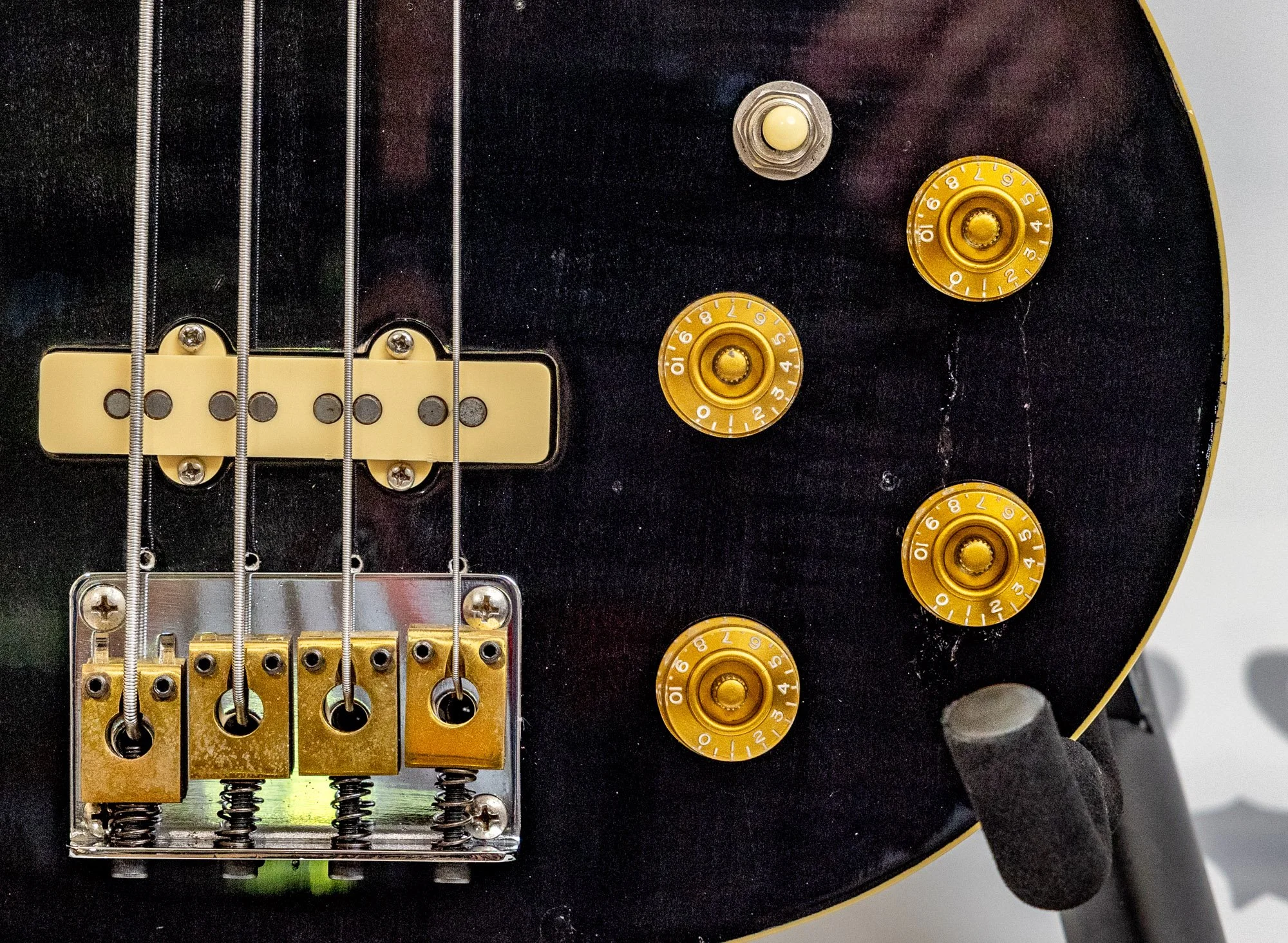
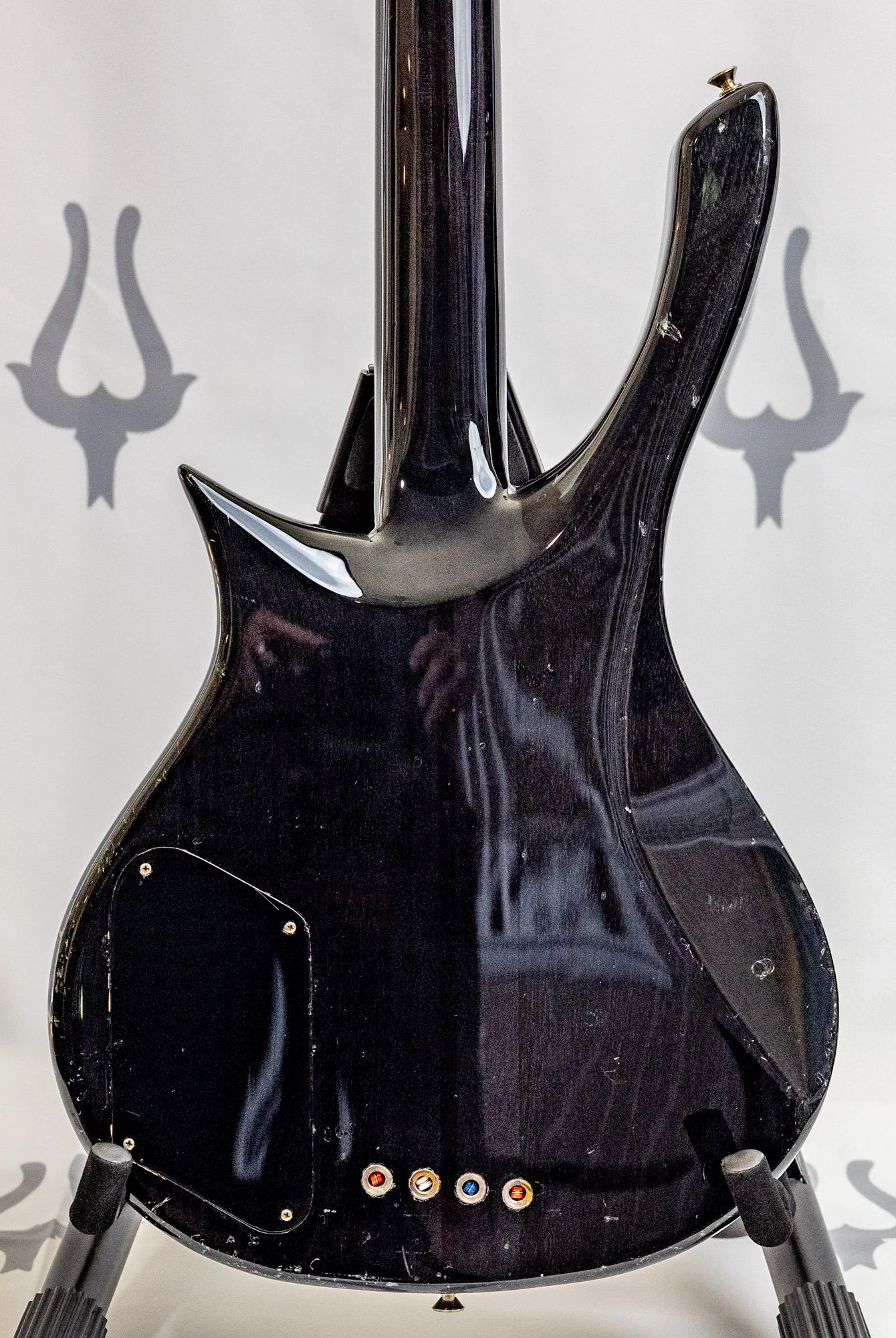
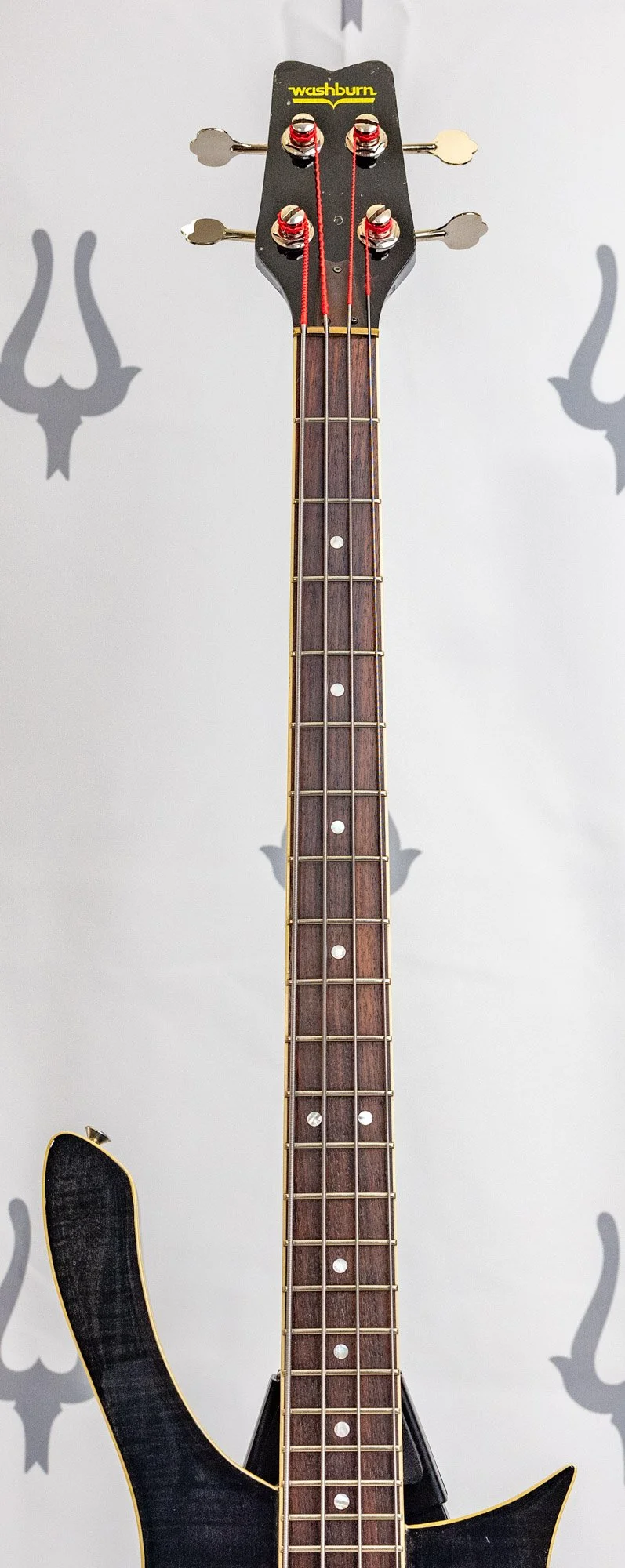
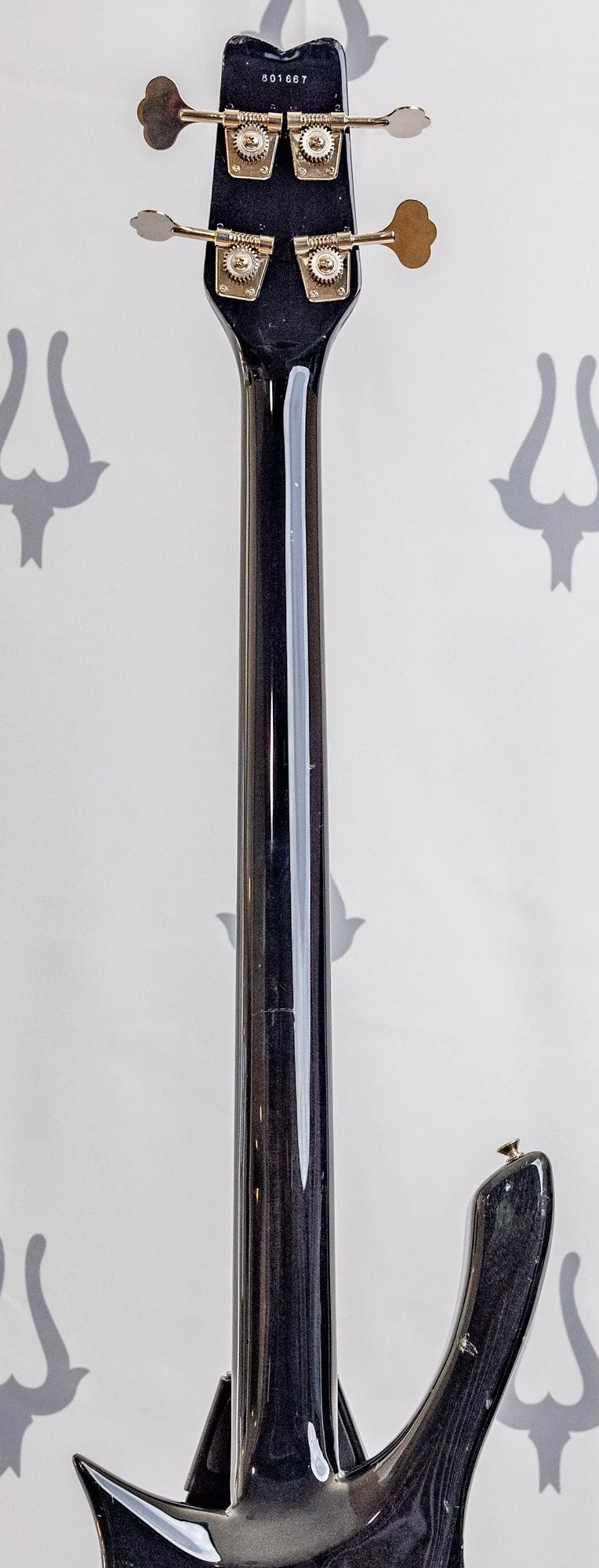
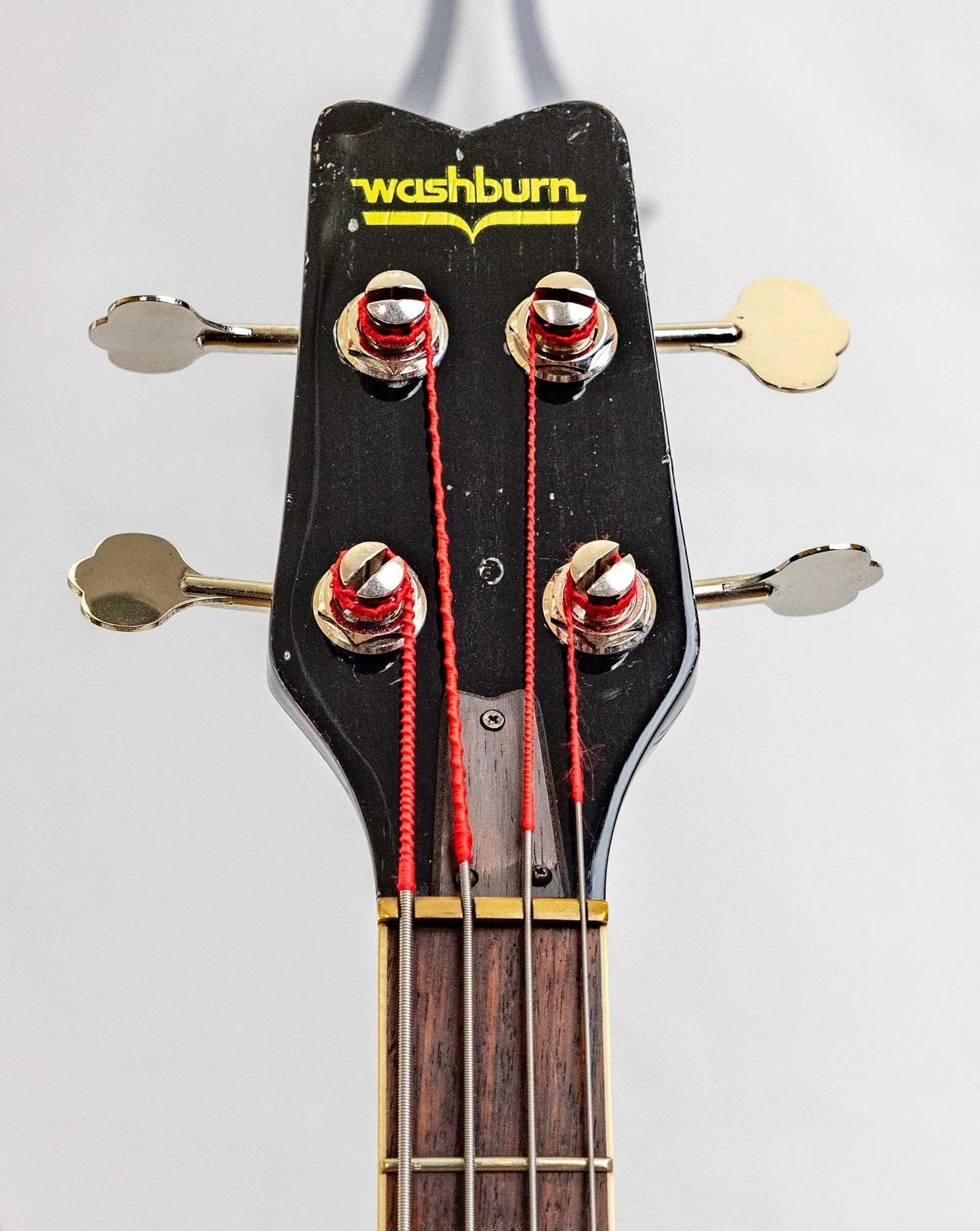
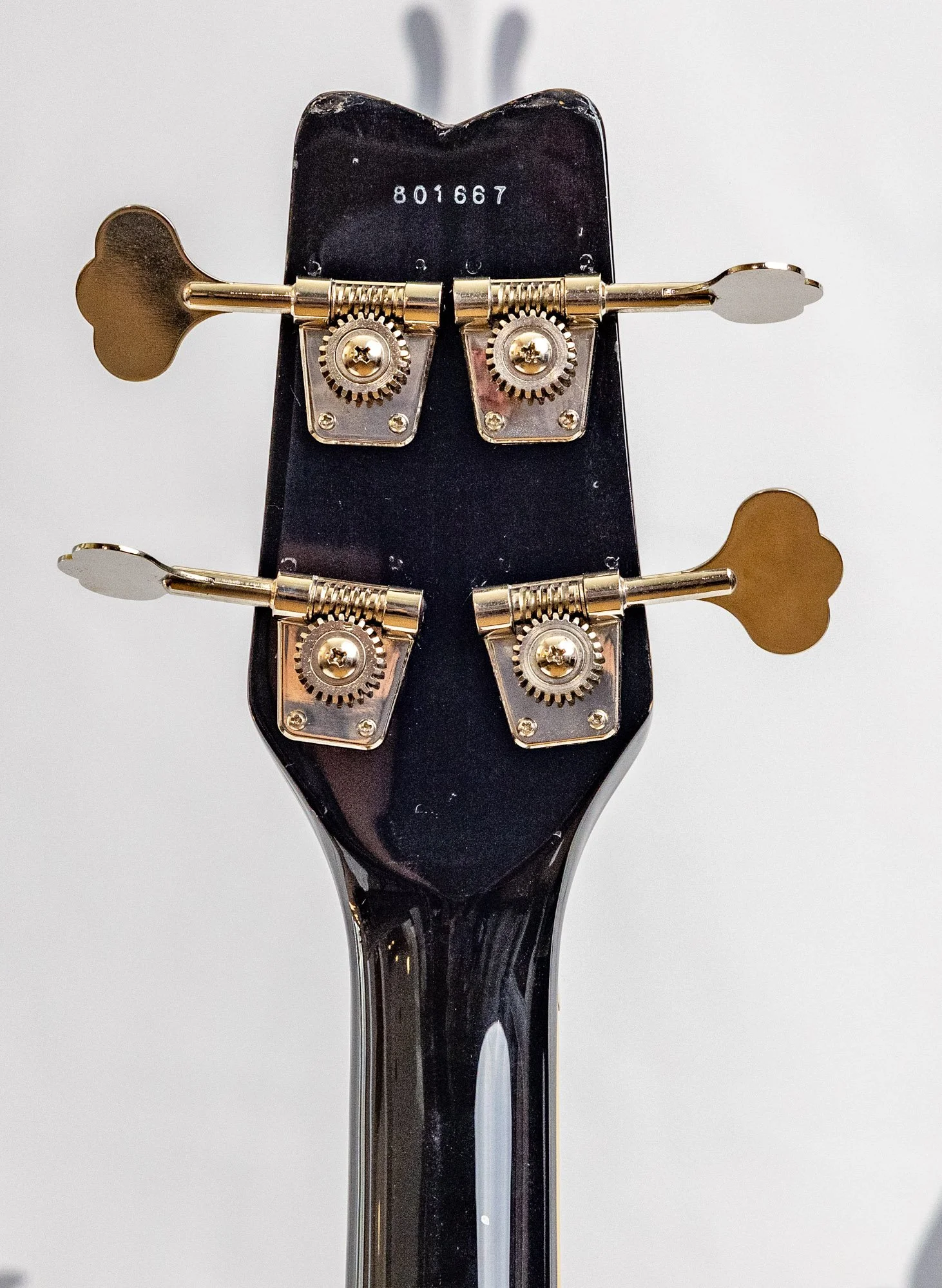
When we say rare, we do know of one other floating around - serial 801627 (very close in sequence to our 801667). Pictured below, it was posted to Facebook in what is probably CS (Cherry Sunburst). That one looks complete and is in much better condition than our black example. Ours was found on Reverb with the wrong truss rod cover, tuners, input jack, and a Select Track bridge made by Cushin (which came on Washburn basses starting in 1982 - how did that get there?). What is interesting is that once the Select Track bridged was removed, there were holes already drilled for the older style bridge with the chrome base plate and individual brass saddles. Fortunately we had the period correct tuners, bridge, input jack, and wood truss rod cover. The good news was that the electronics were intact - including the metal cover for the circuit board based electronics. Cosmetically the bass was ruff to say the least. Though the frets and fretboard were in great shape, the body looked like it had many more miles.
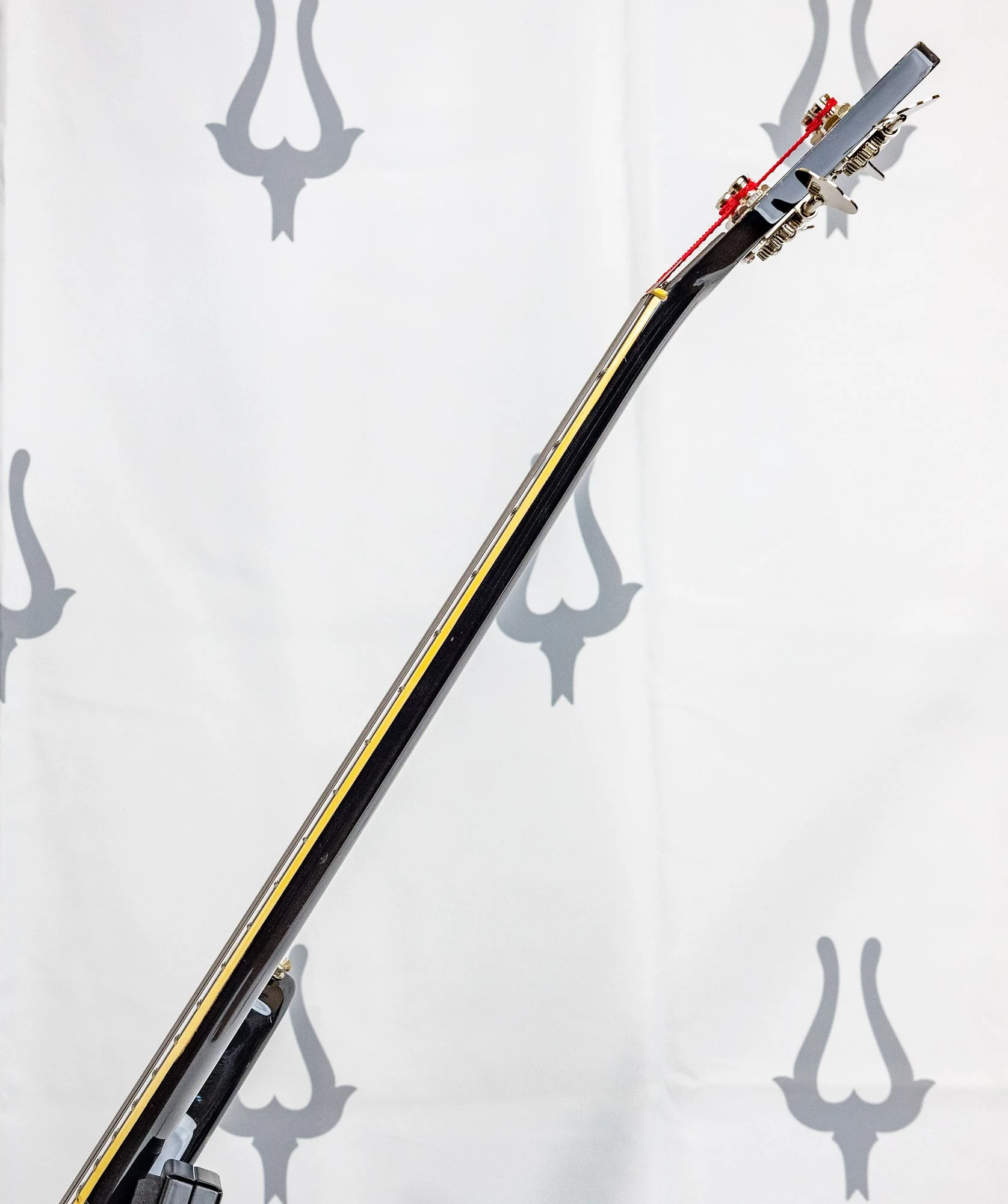
Worse of all the body had taken a hit by the pots and cracked the maple top. To reinforce this area, we shaped a wood reinforcement plate which was glued in from the backside of the control cavity and clamped. That worked great as it brought all the wood to same level on the maple top so we could continue with finish repairs. There is still a visible scar, but it is very stable and flat. The body had deep scratches, and plenty of dings and chips. The neck had a gouge that you could feel when playing. GluBoost was our goto to fill in the endless dents, chips, and scrapes. All the hardware and electronics were removed and the entire bass was wet sanded to flatten the finish before polishing. With all the correct bits back on the bass, the transformation was complete. The bass took a setup easily and plays great. The balance of the extended horn is wonderful. We’re surprised that Washburn didn’t mass produce this body shape - it’s really stood the test of time and has great ergonomics.
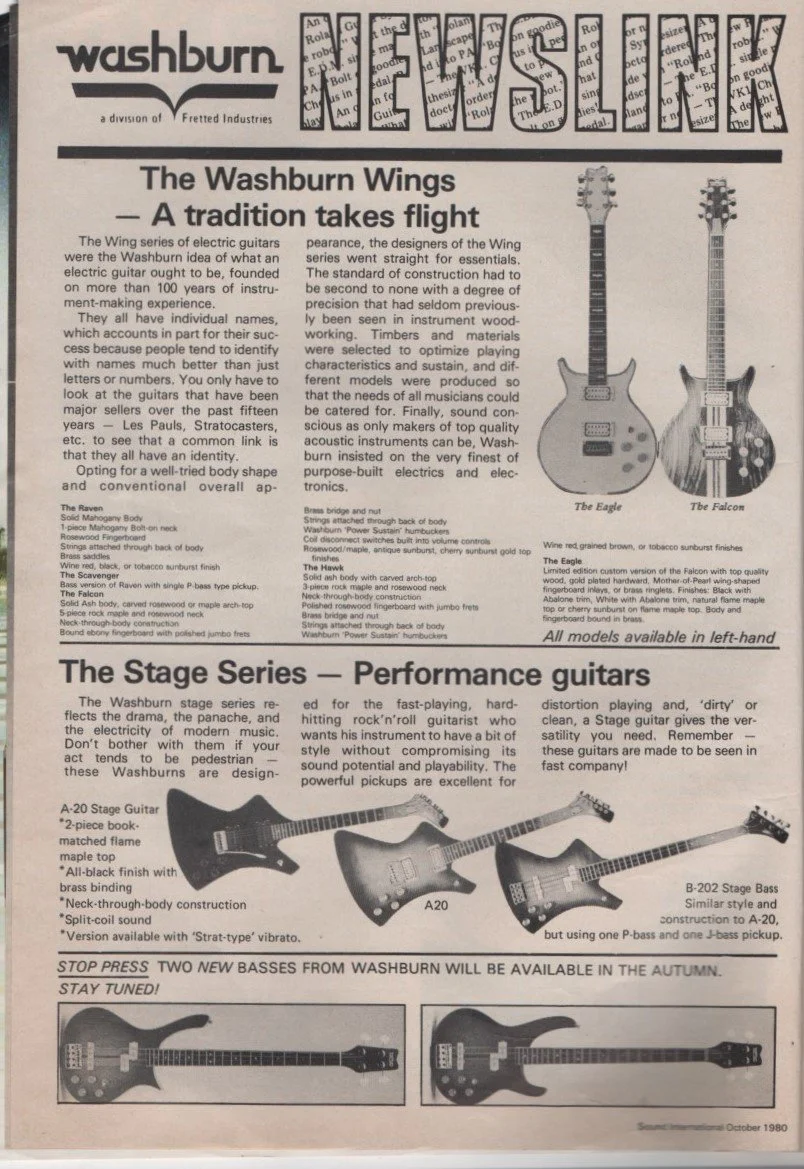
Condor pictured bottom left - Sound International Magazine October 1980
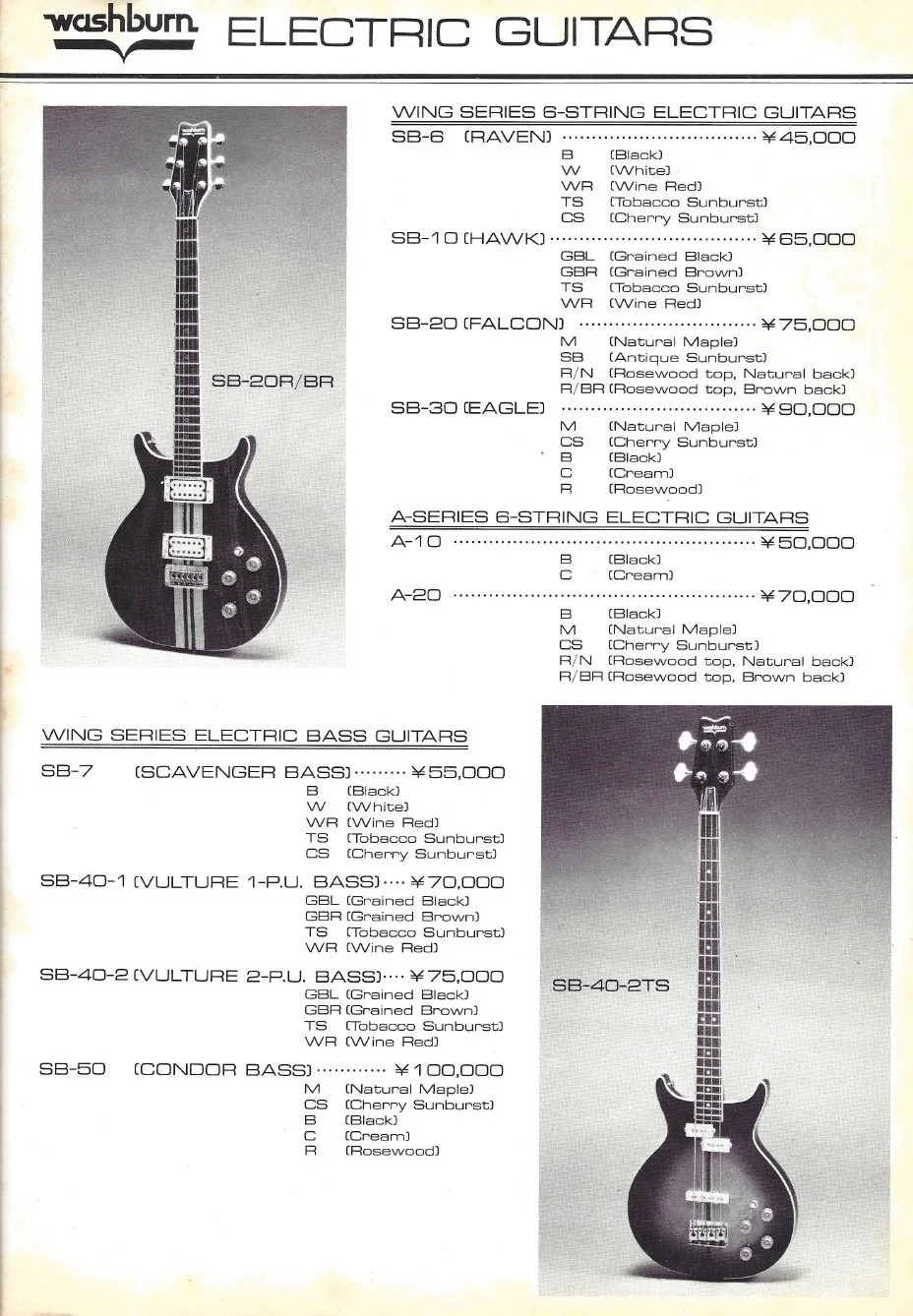
SB-50 Condor - 1980 Washburn Japanese Catalog and Price List
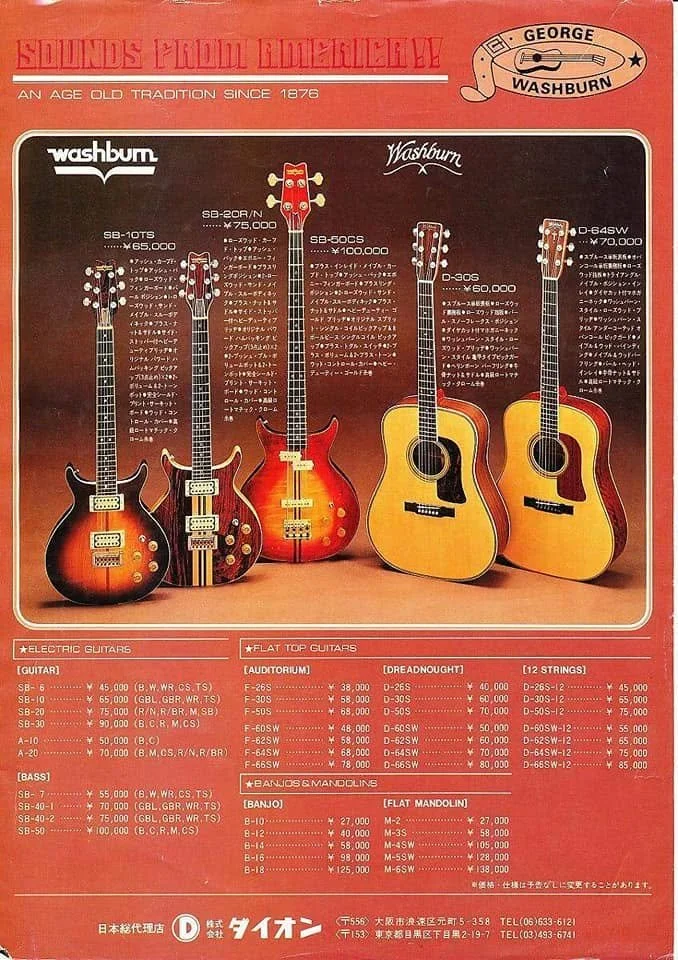
Washburn Ad in Japanese from 1980? with the SB-50 Pictured
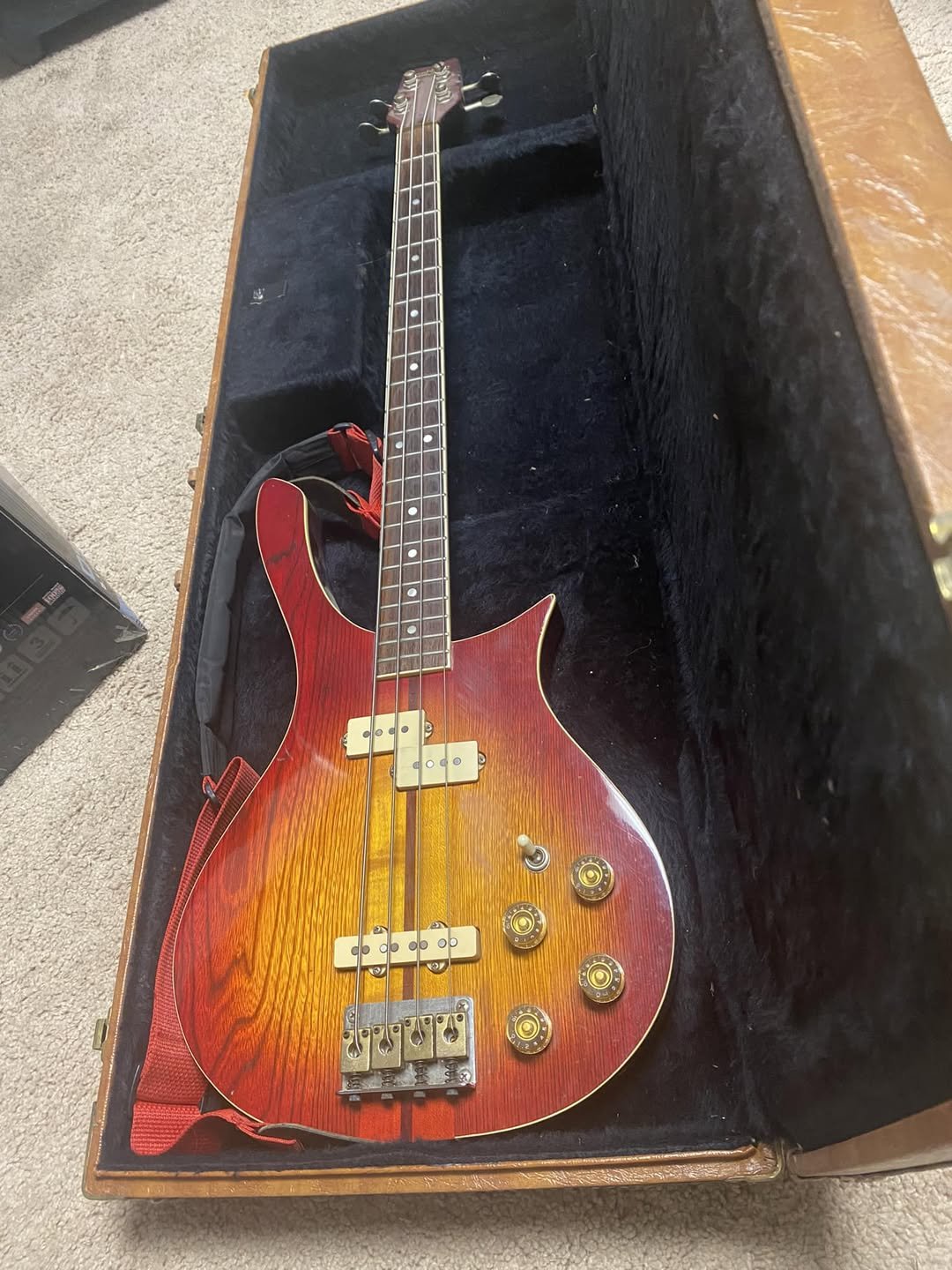
Washburn 1980 Condor Cherry Sunburst Serial 801627 - Image from Facebook
We don’t normally show restoration photos, but this was quite the journey and one of the most difficult restorations we’ve tackled. Days and days of work have made it presentable and a joy to play!
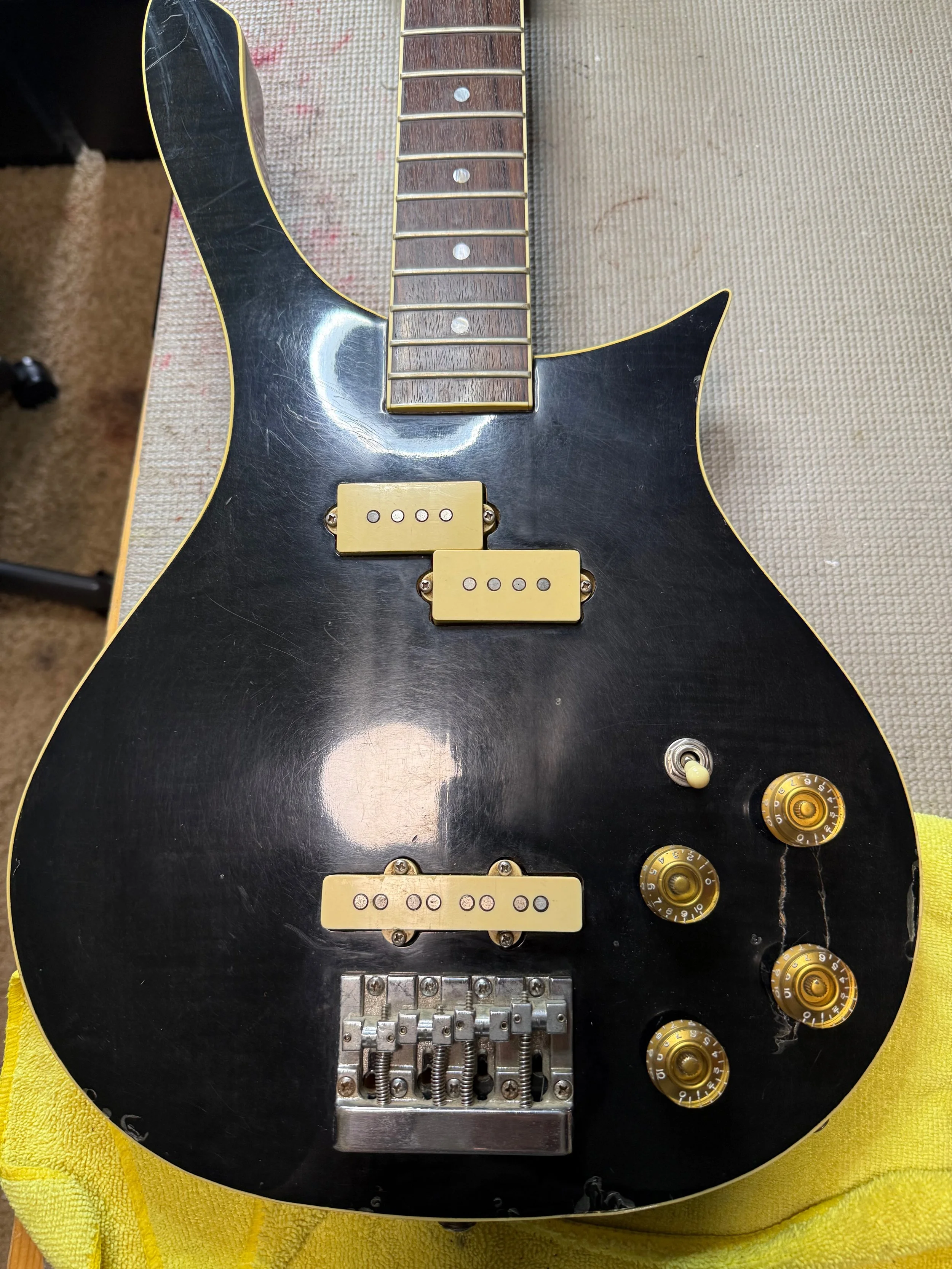
Though the frets and fretboard showed little wear, the body was a different story
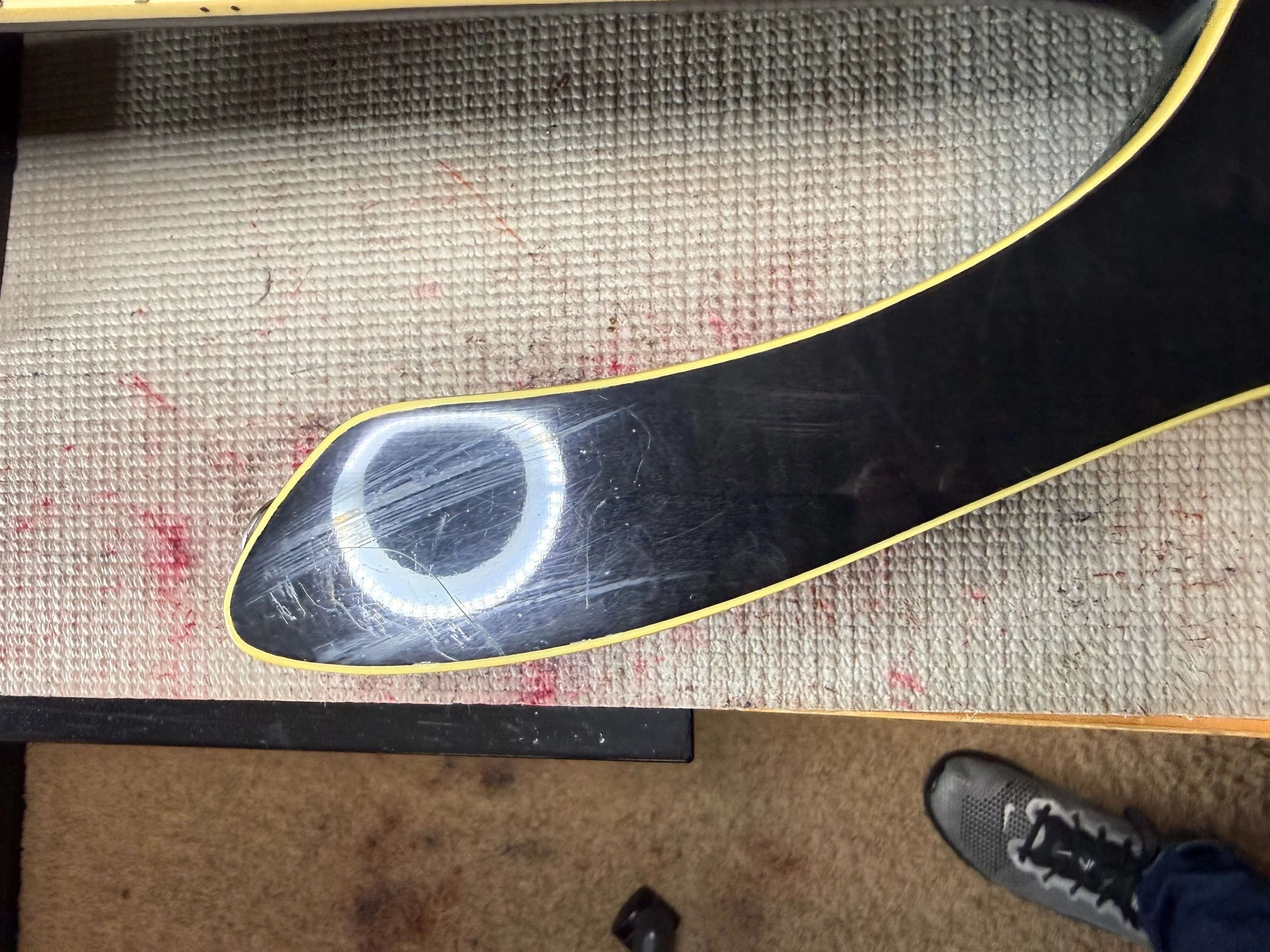
Deep scratches will be a challenge and will require wet sanding
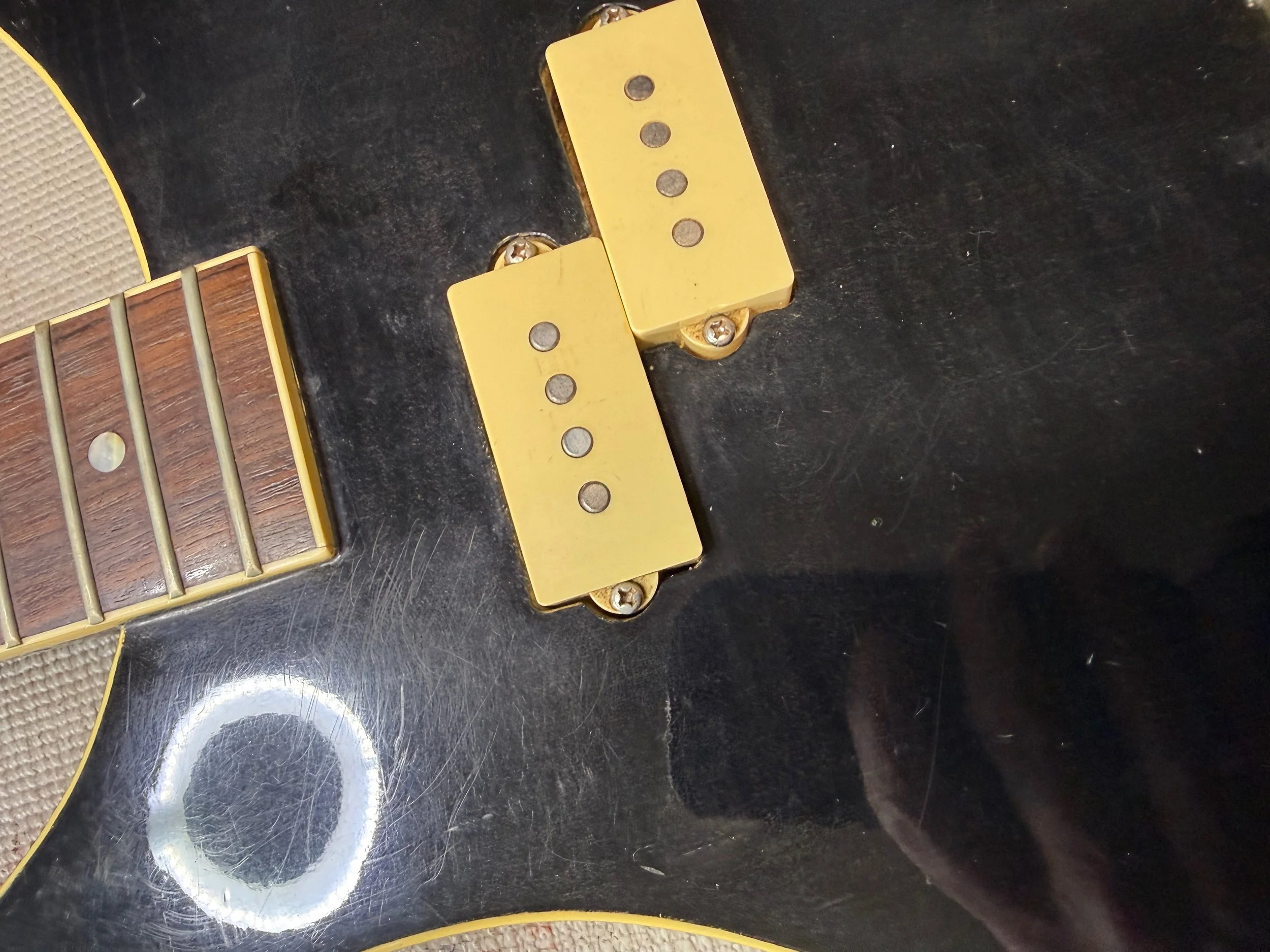
More visible scratches that will need to be polished out
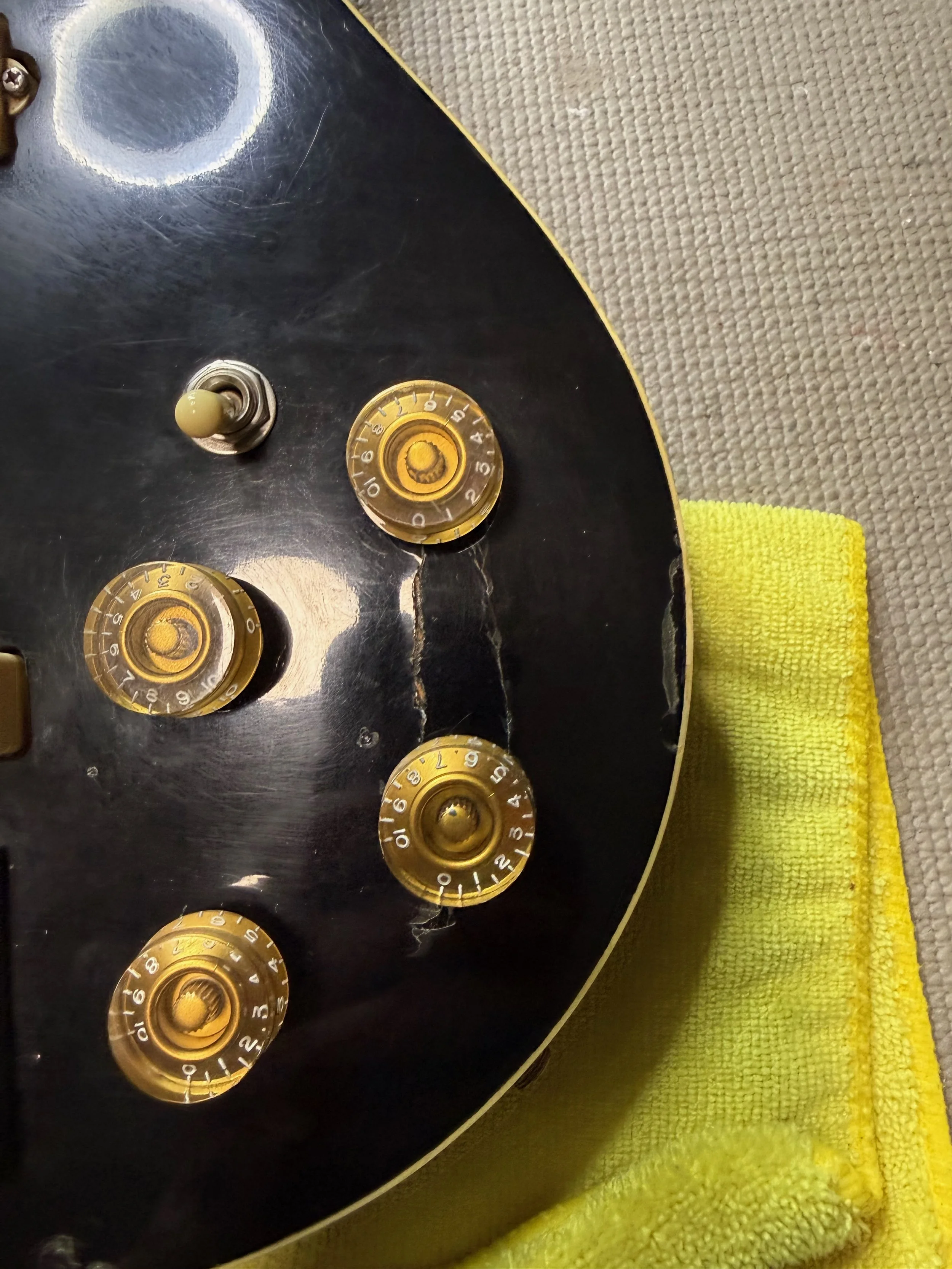
Close up of the cracked maple top by the knobs
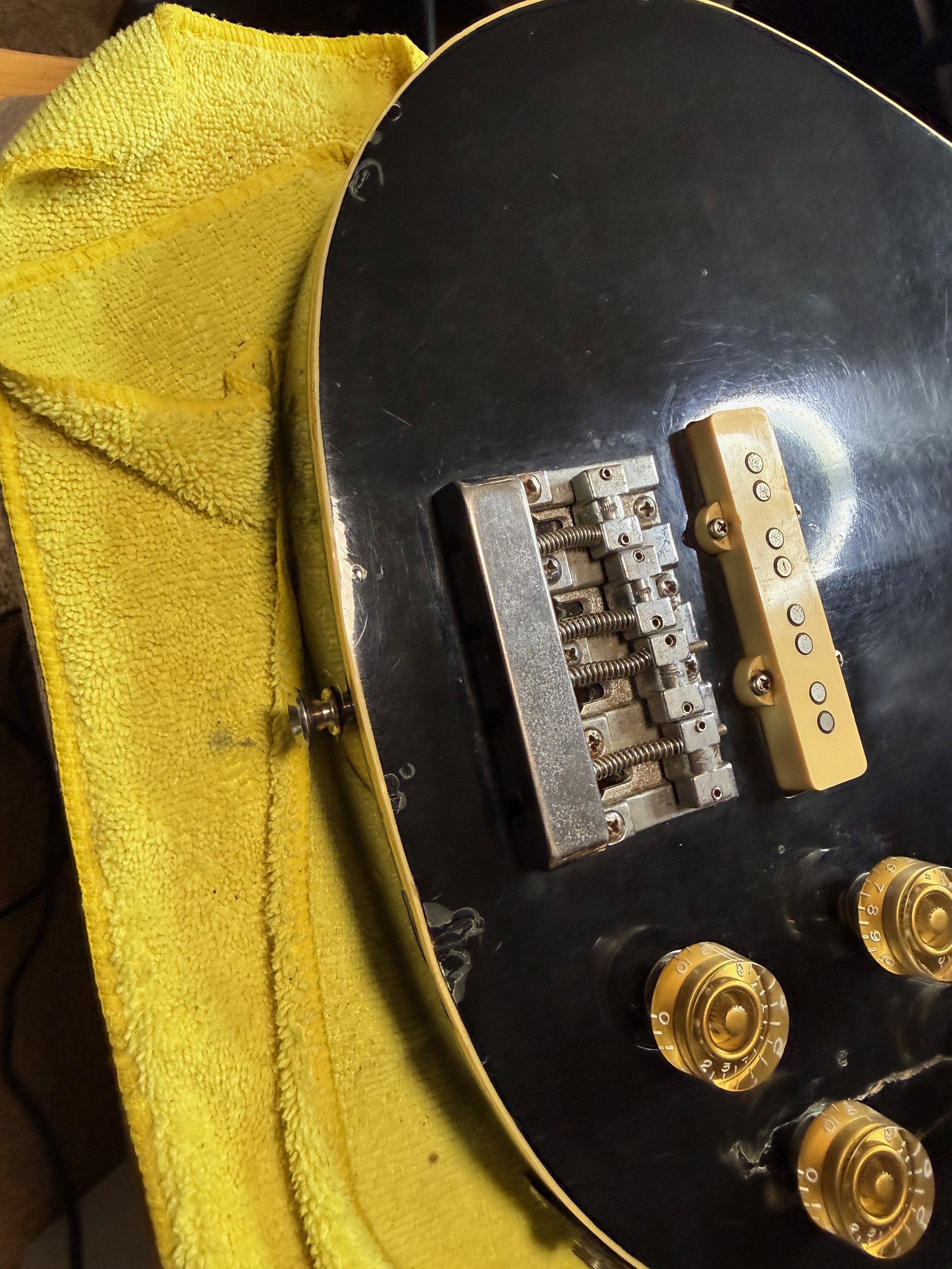
Sure Track bridge design (1982) should not be on a 1980 bass
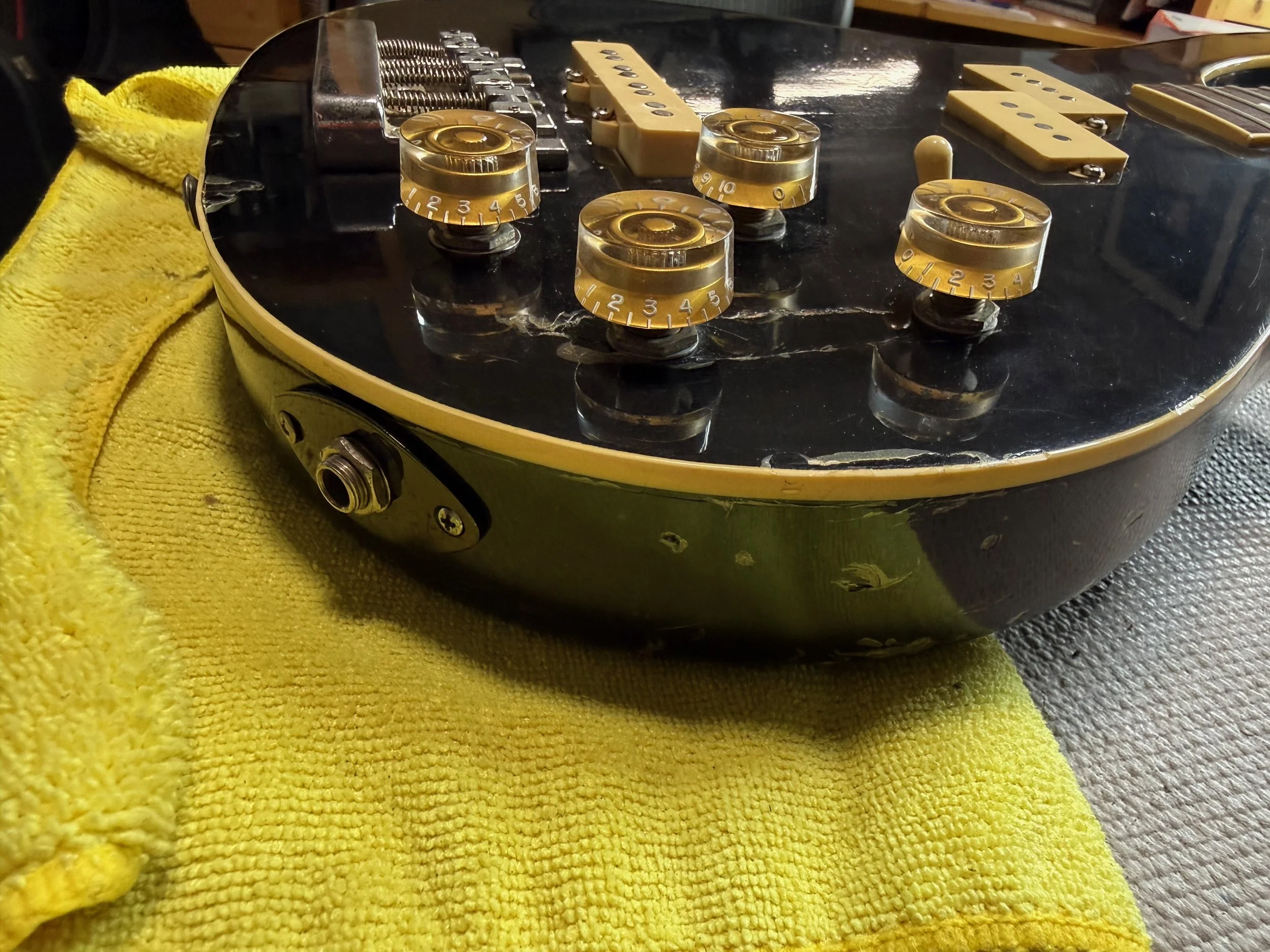
Wrong input jack
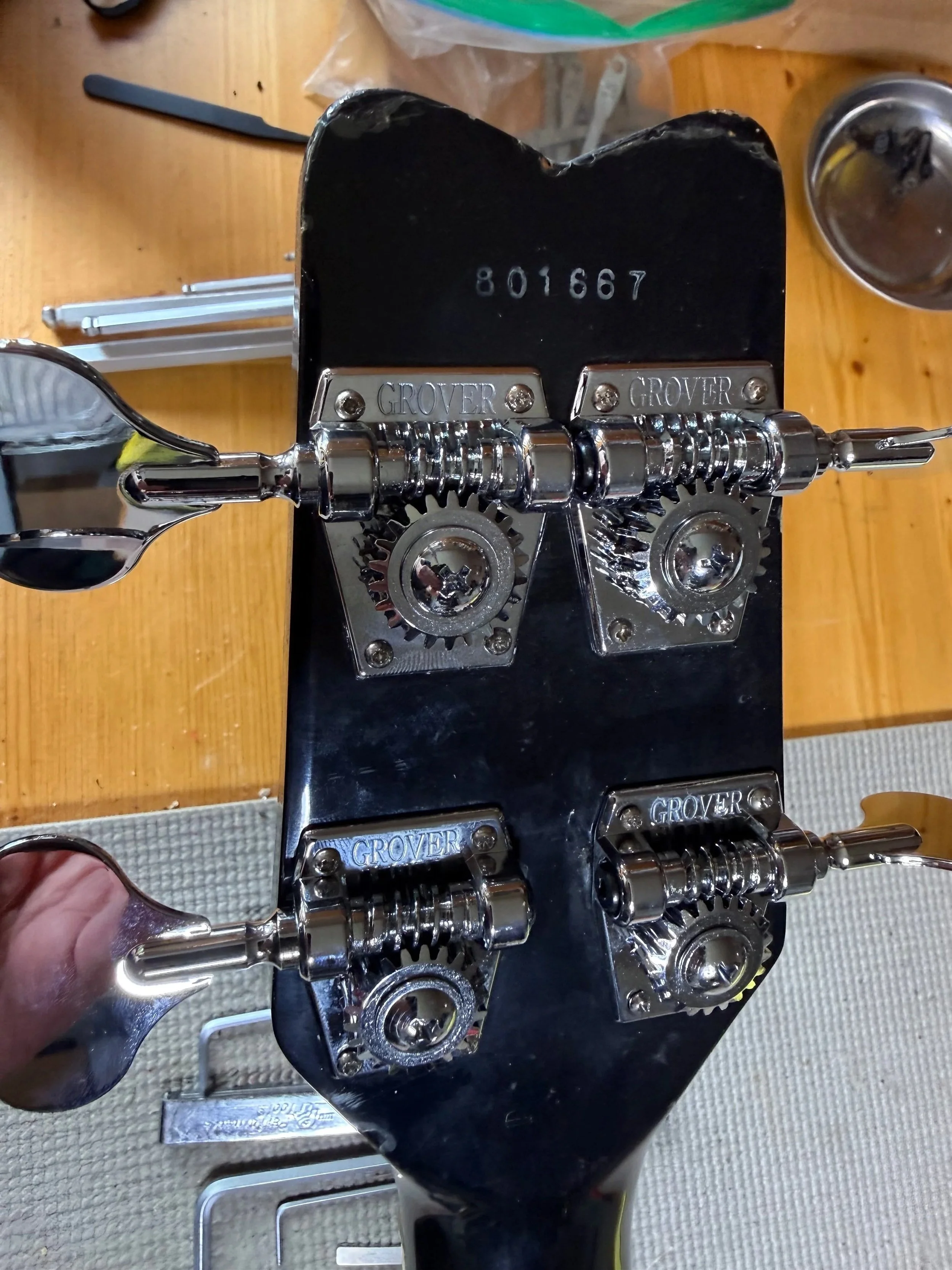
Grover tuners are not correct (and added extra holes that would need to be filled)
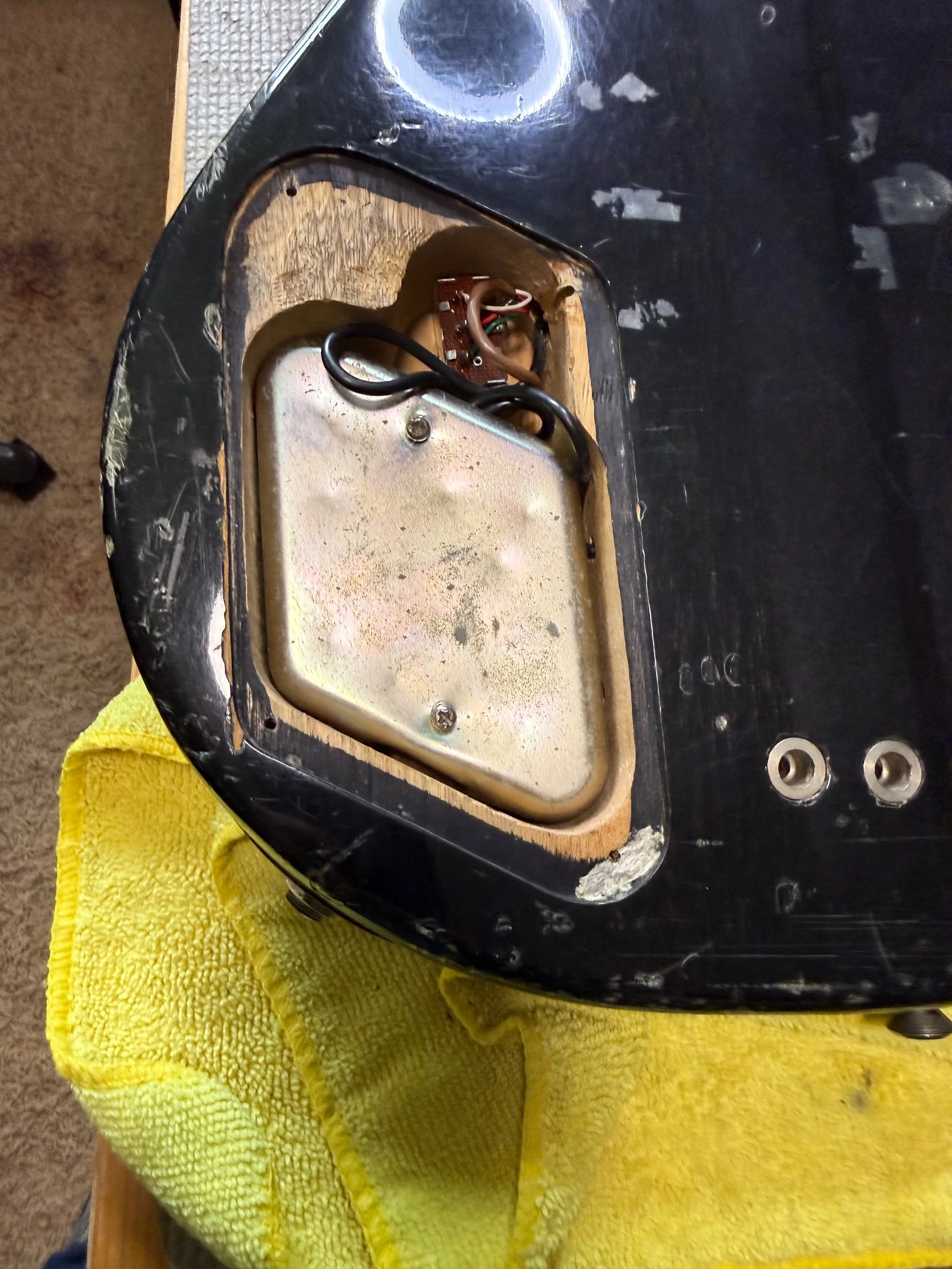
Correct Yamaki electrics
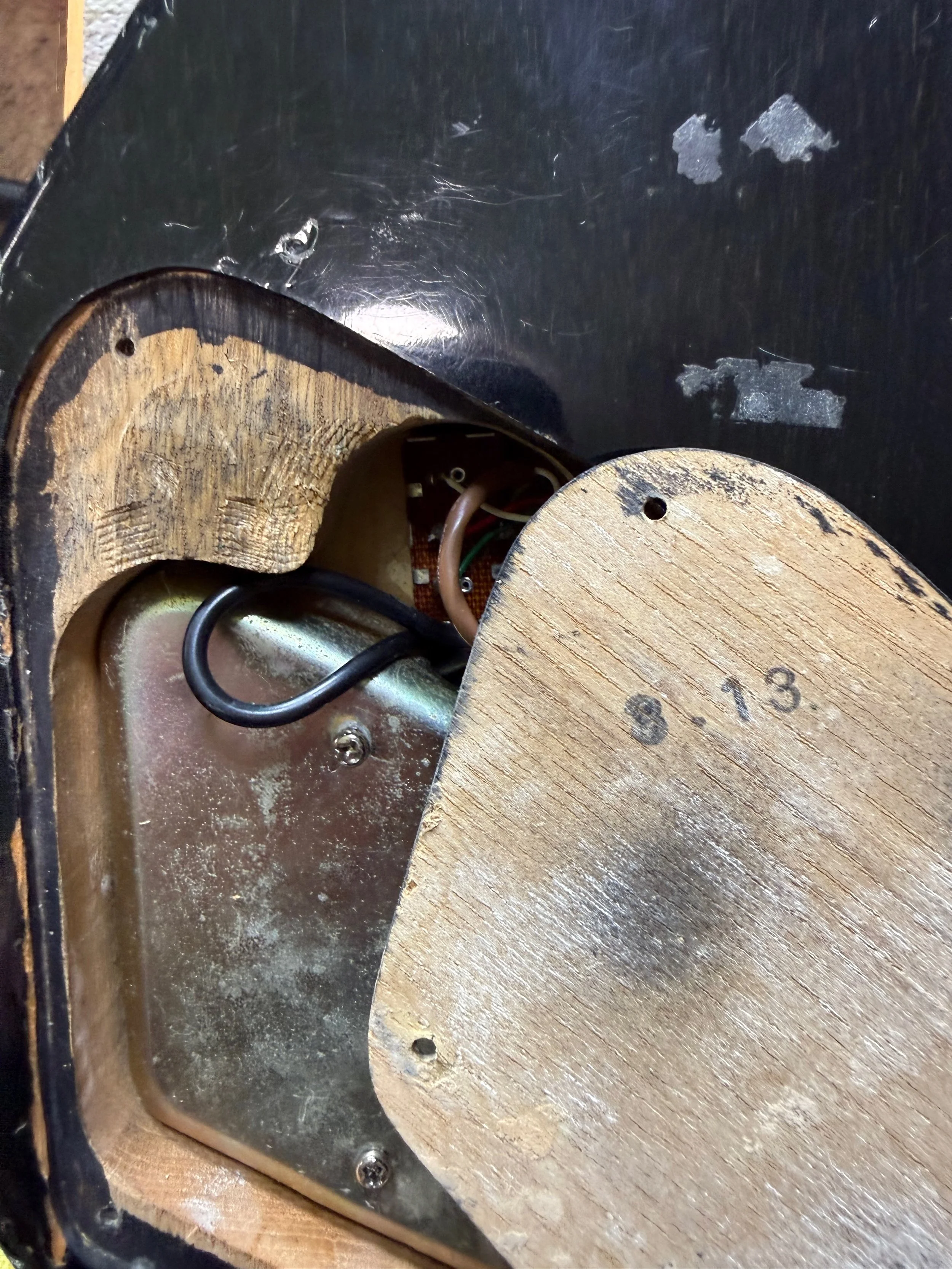
Number on back of control cavity
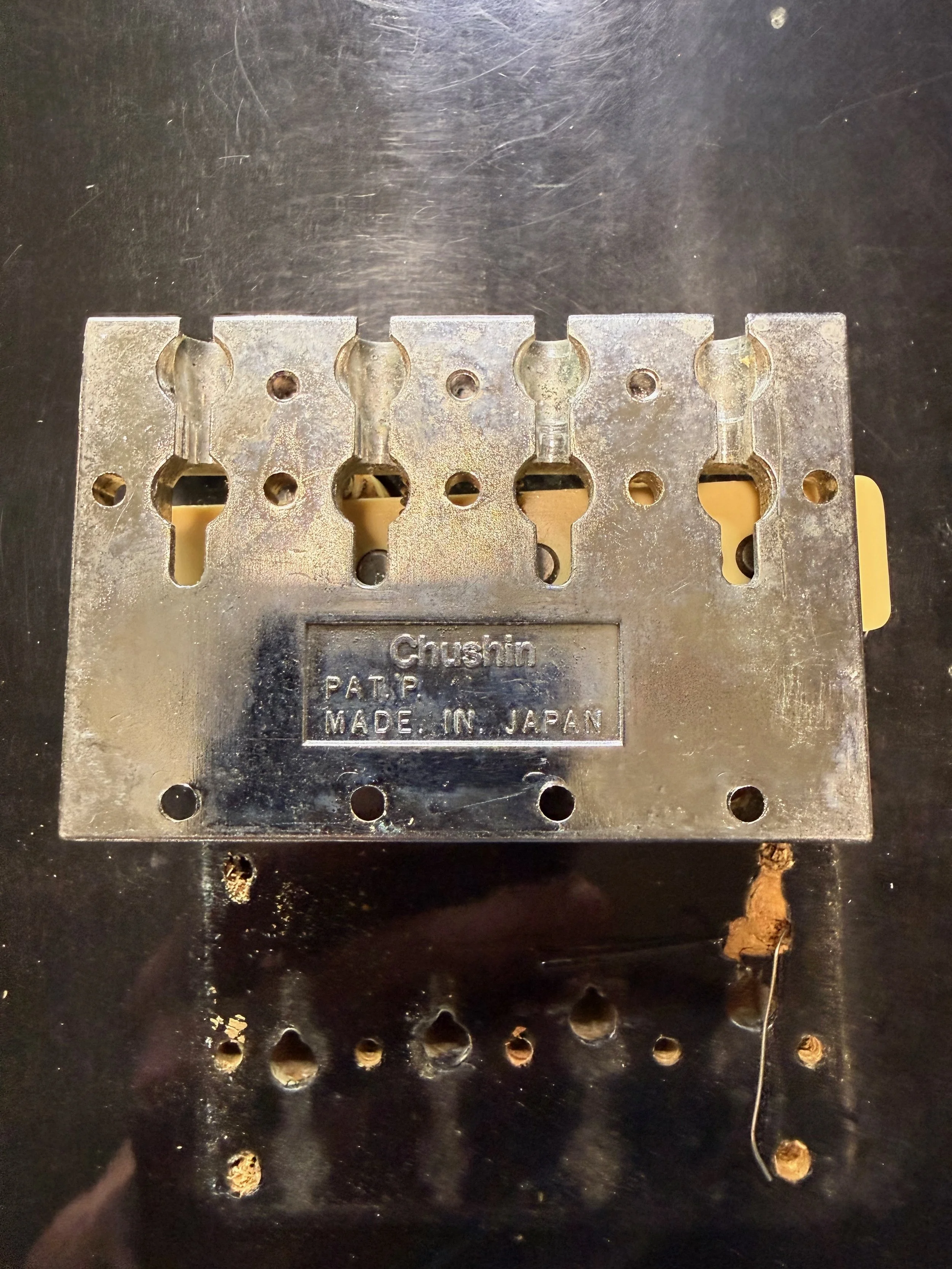
Cushin bridge - Washburn correct for 1982 and later, but this is a 1980 build
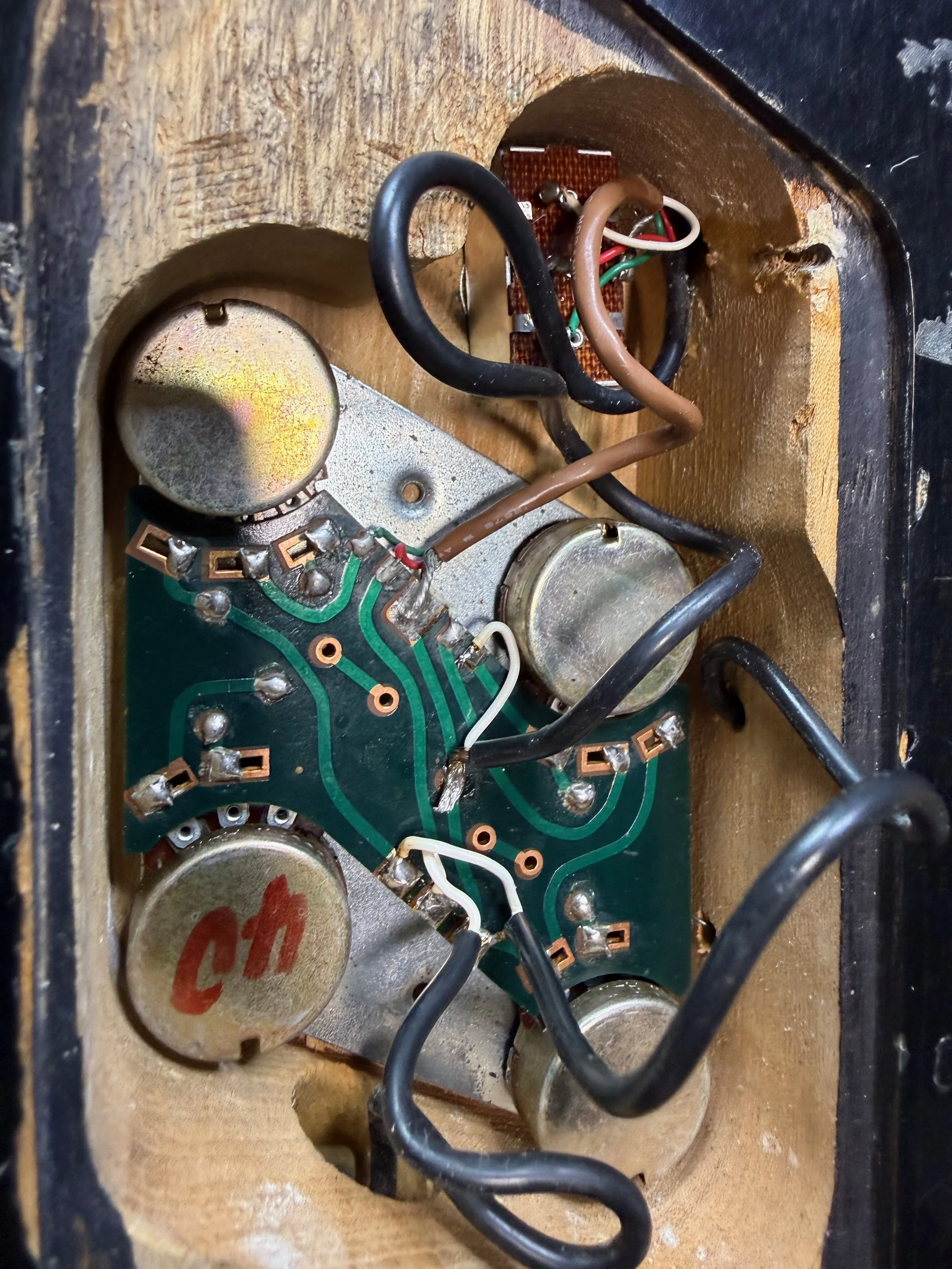
Yamaki circuit board - pickups had to be de-soldered to removed
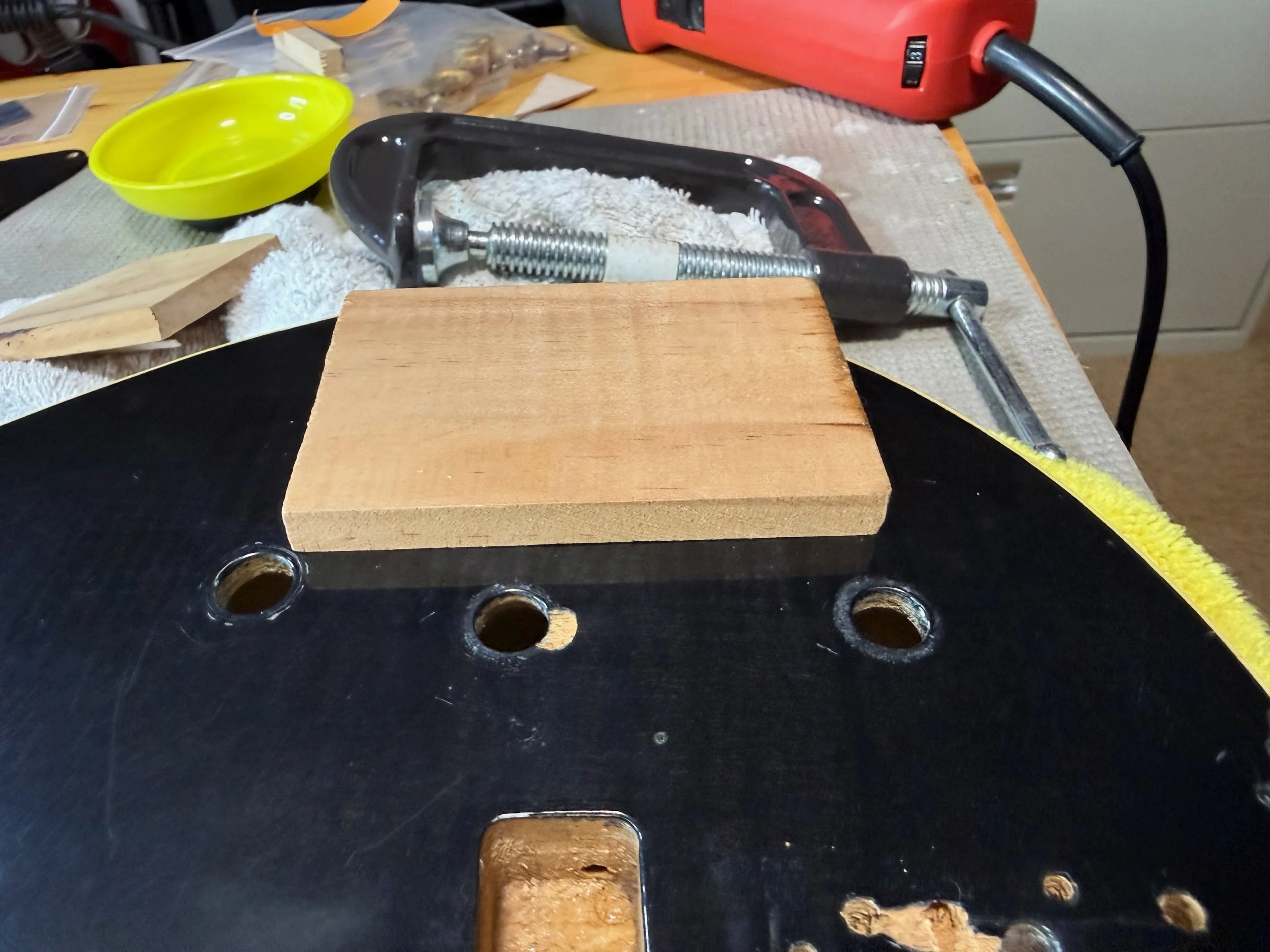
Fixing the crack on the top - coming up with a game plan
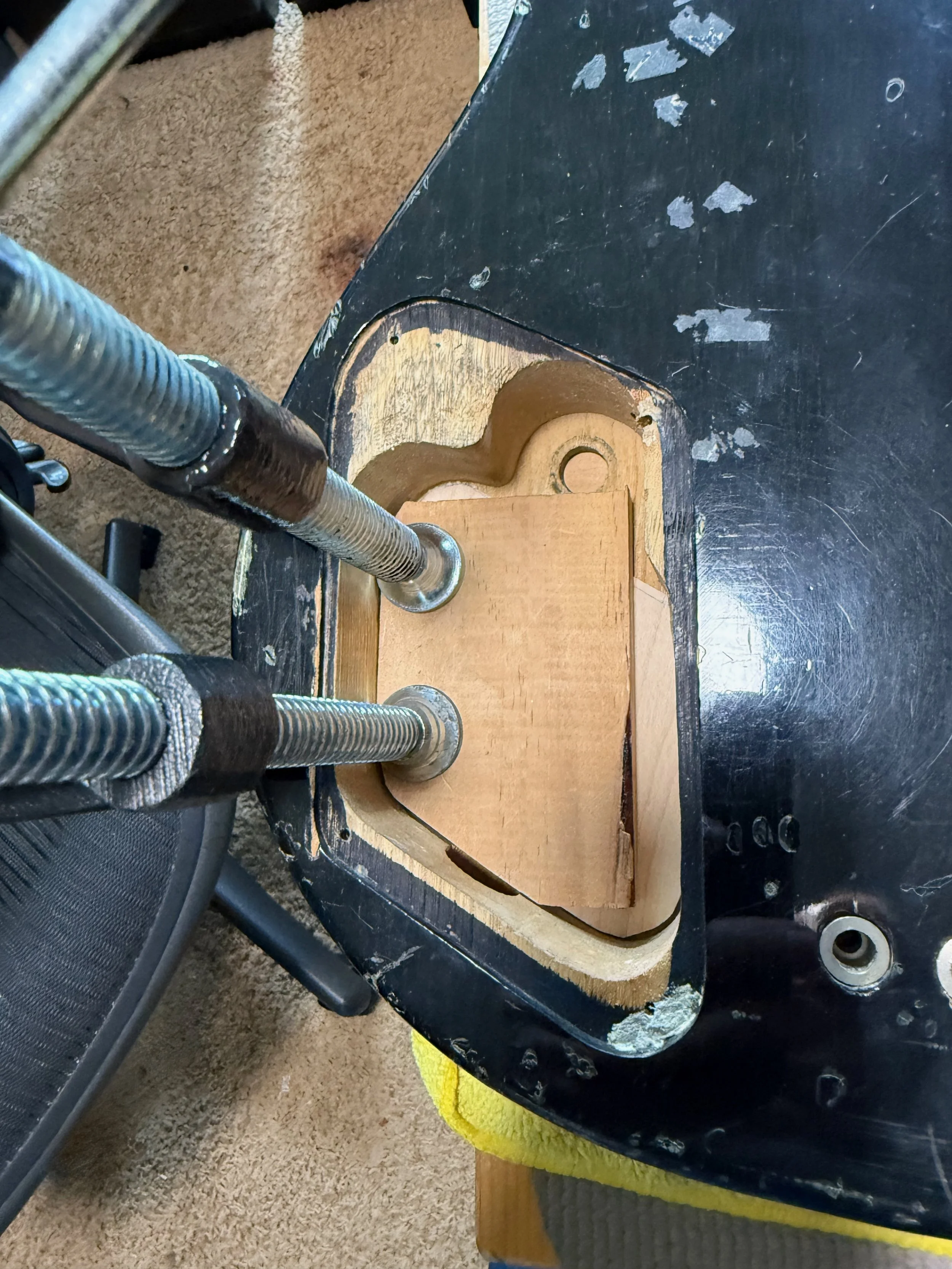
Test fitting the clamps
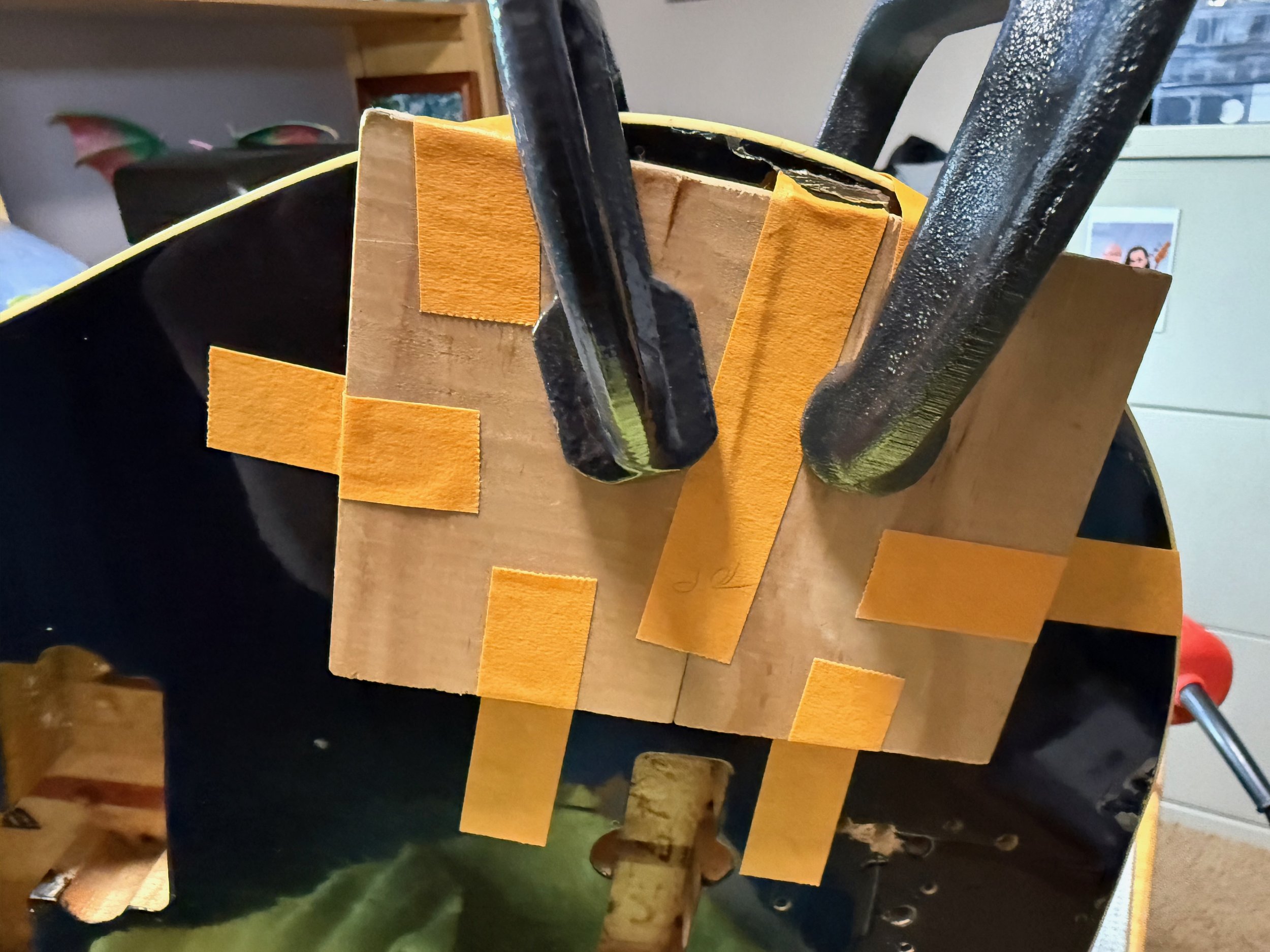
Clamps from the top
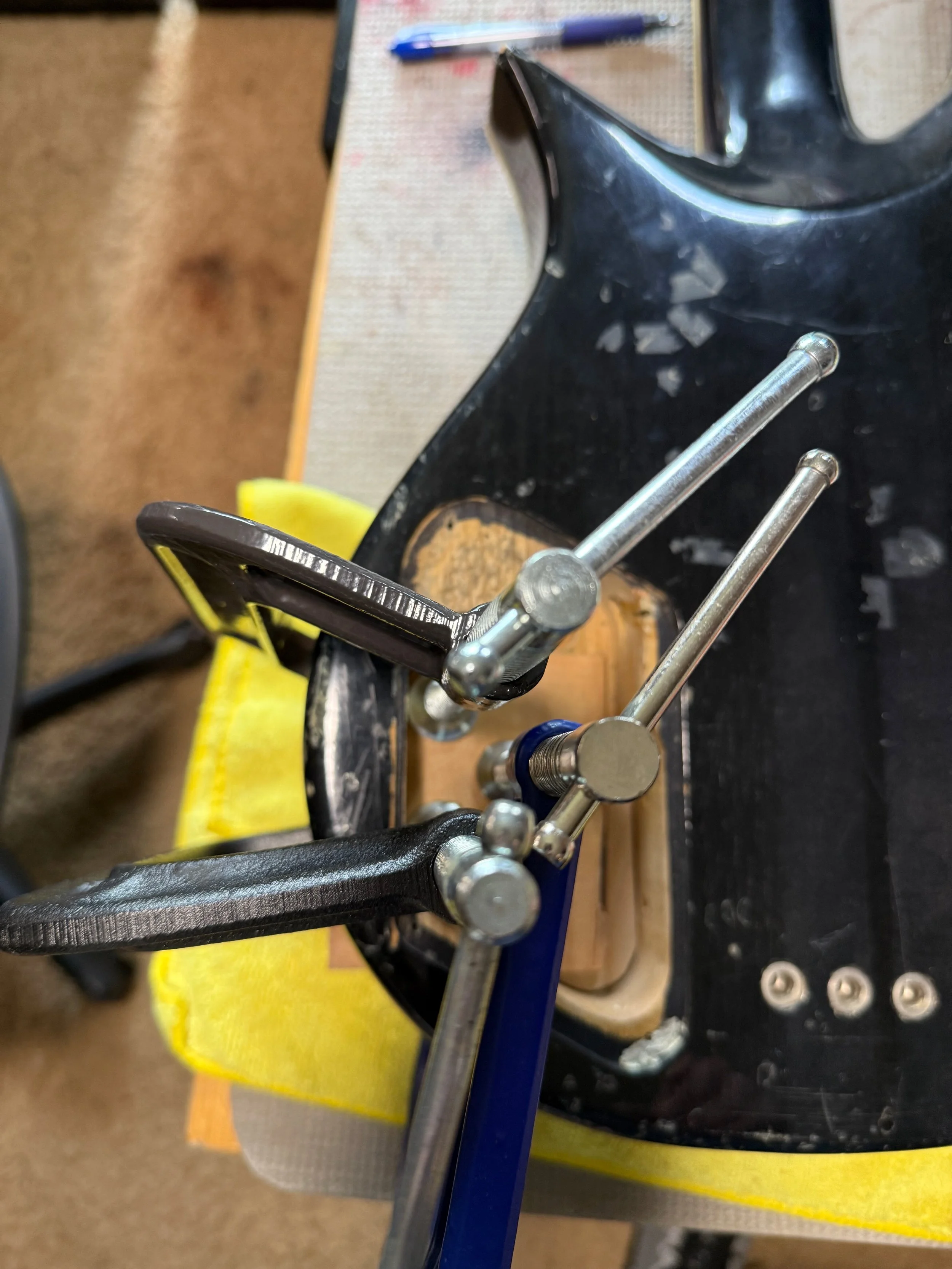
Clamps from the bottom
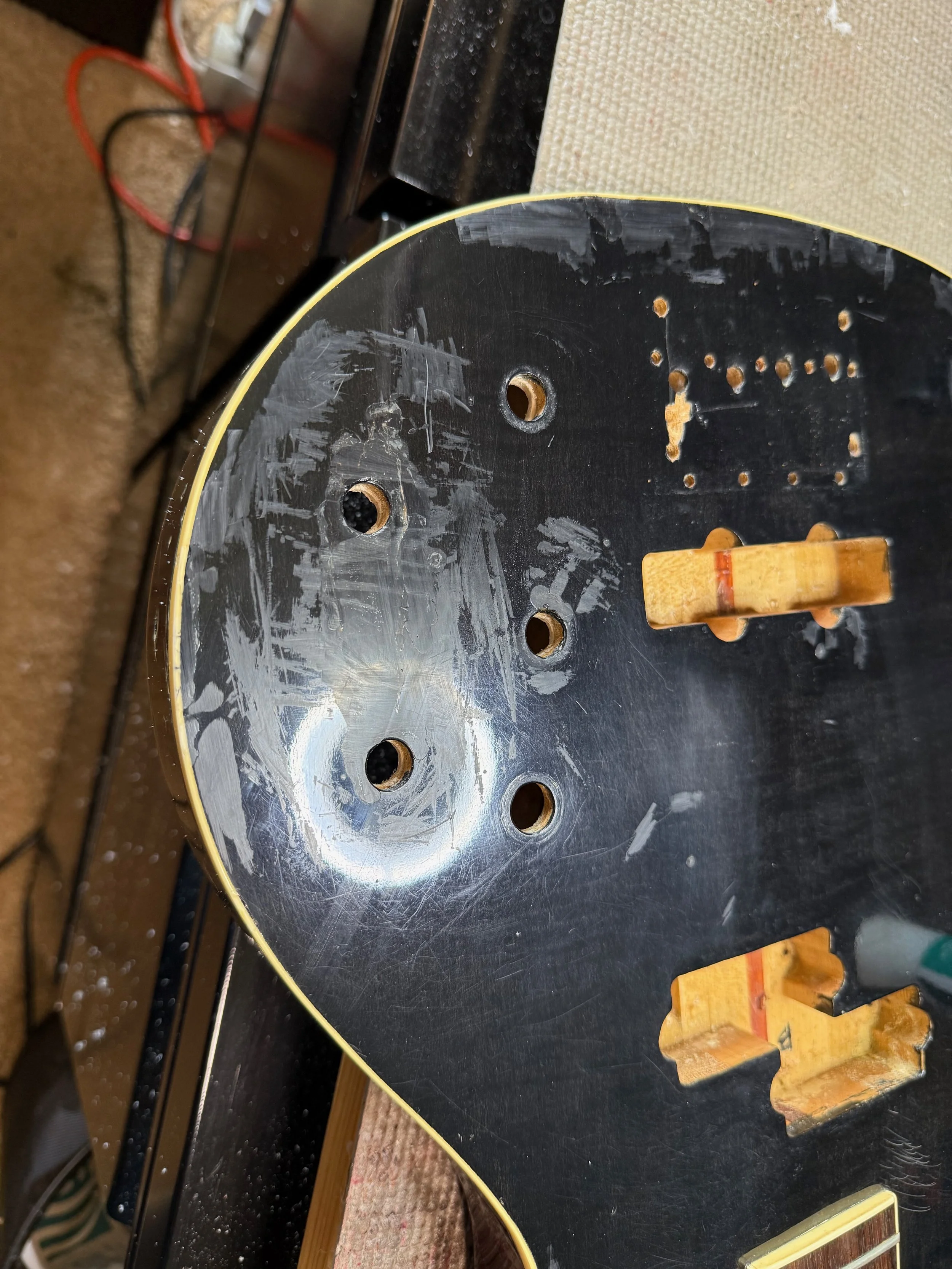
GluBoost is applied and the top scraped off by a razor blade before wet sanding
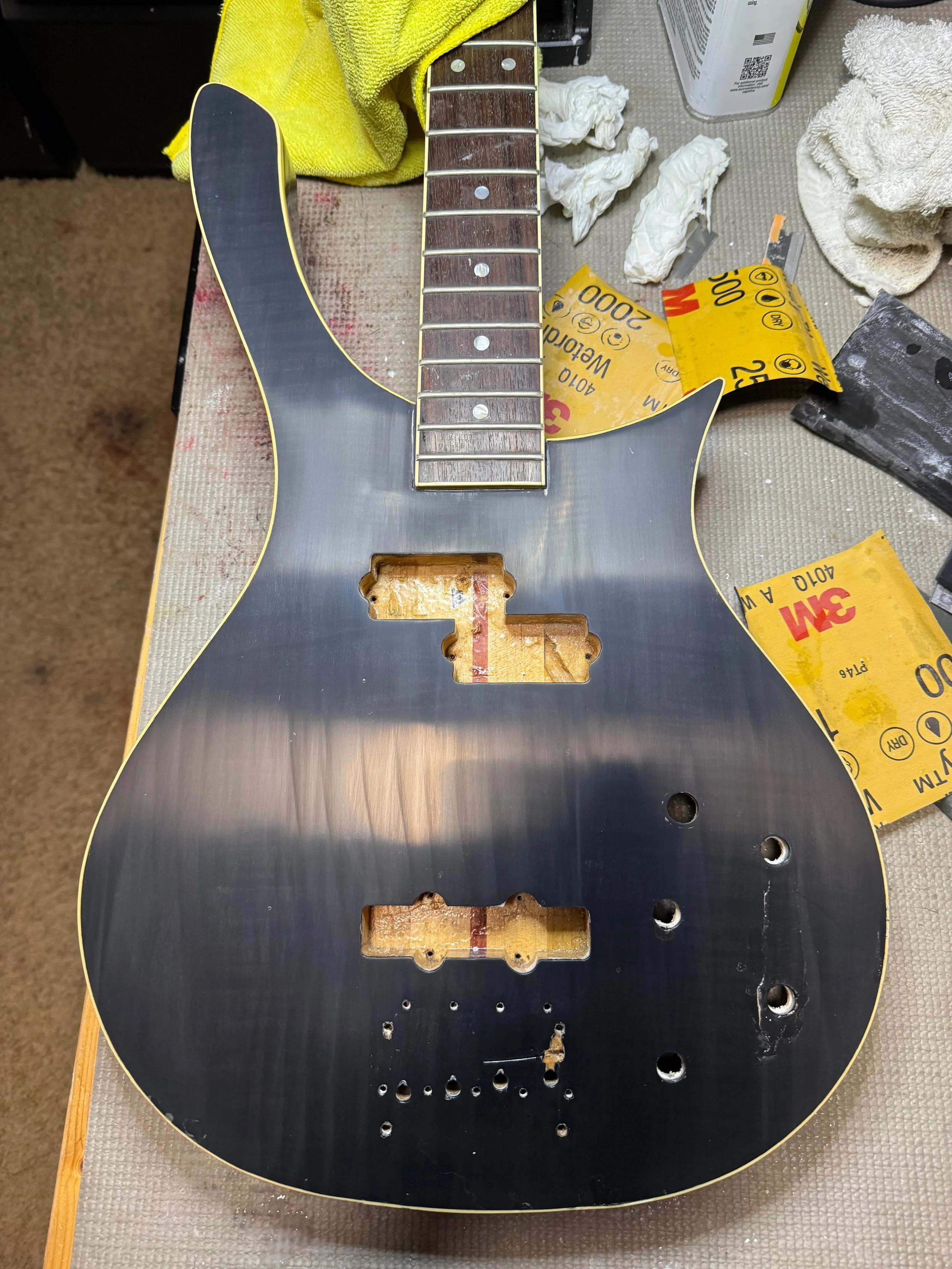
Wet sanding begins to flatten the clear coat
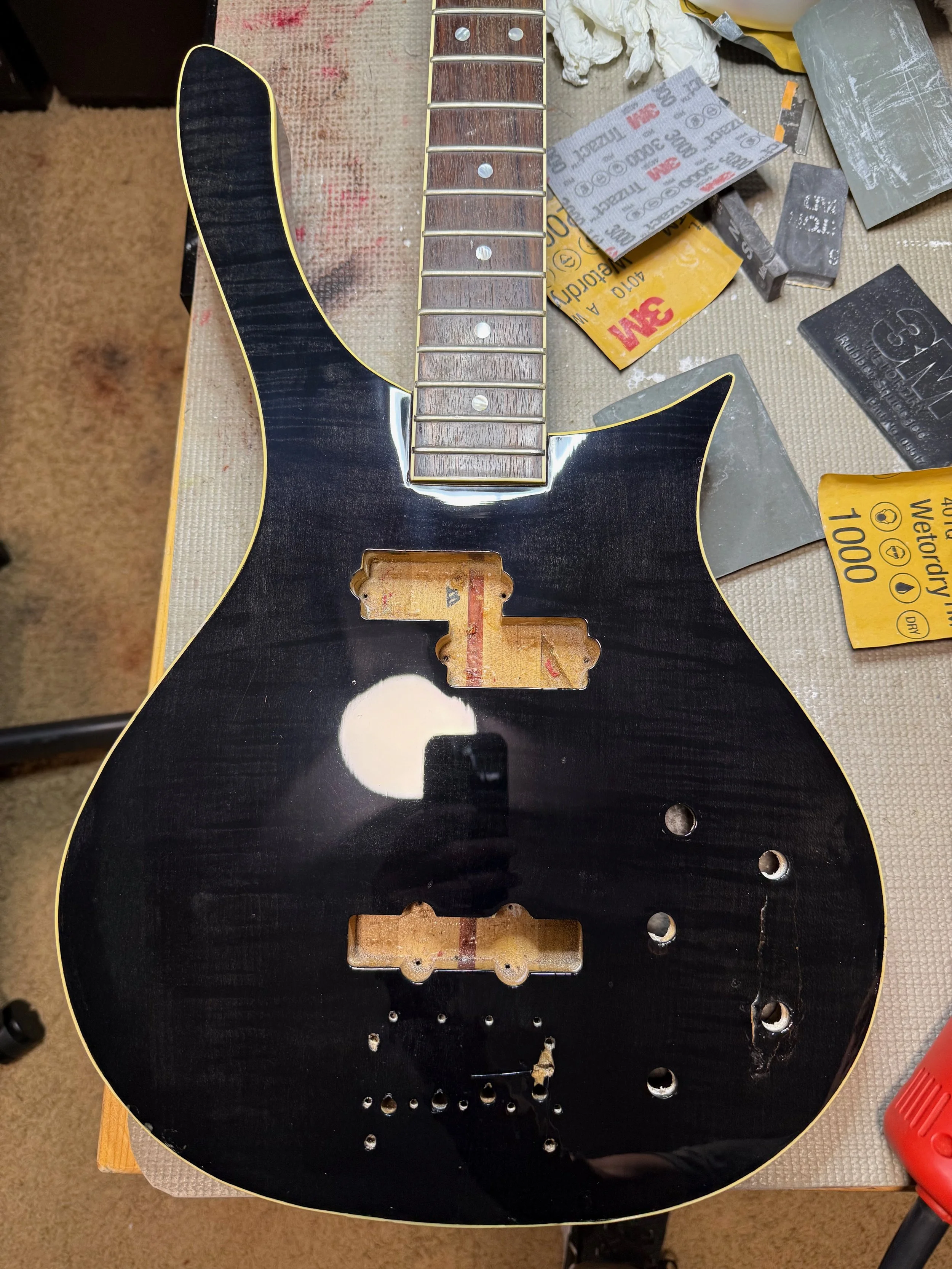
After sanding and polishing - quite the transformation!
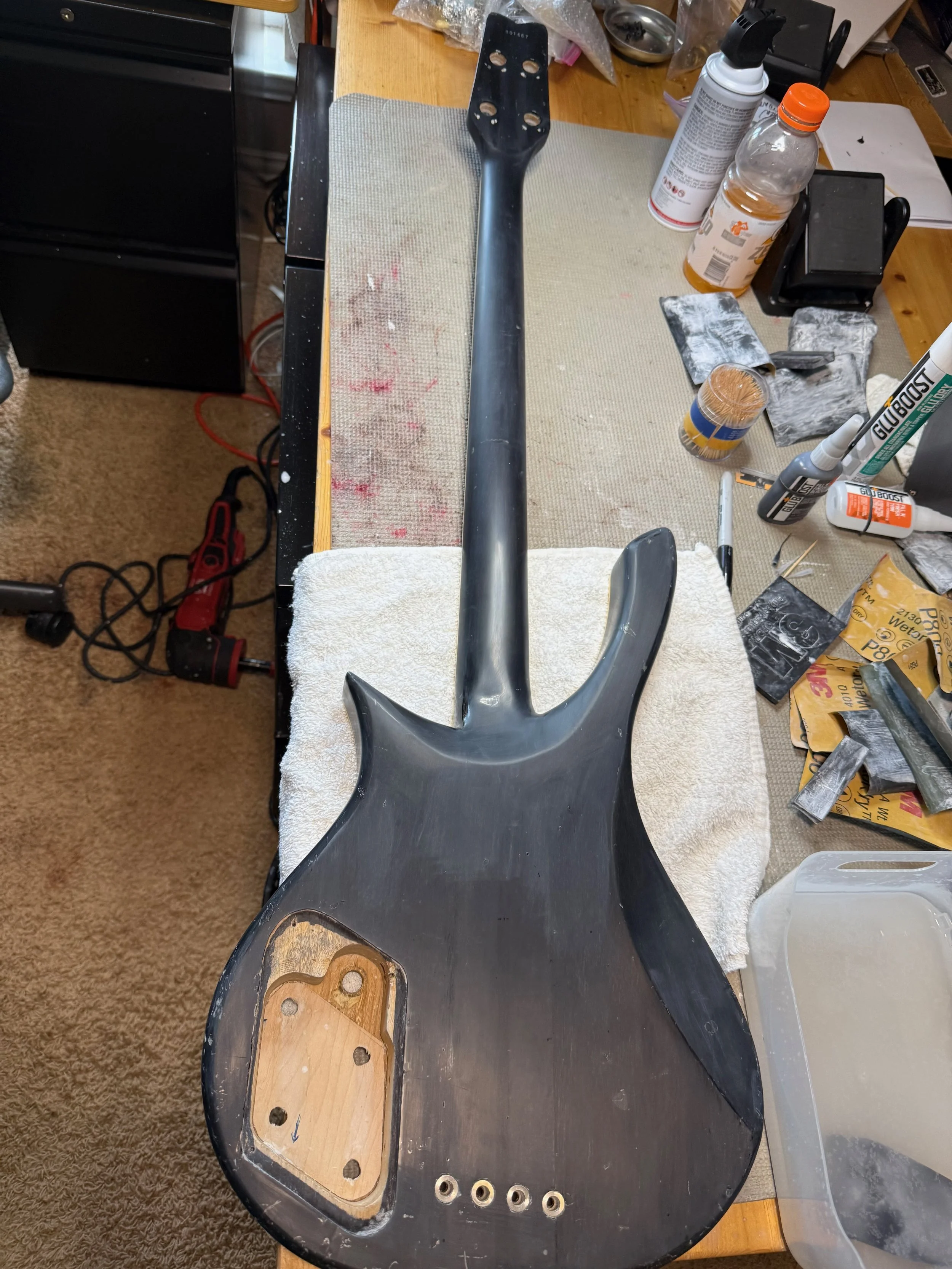
Wet sanding. You can see that holes have been drilled into the reinforcement plate in the control cavity
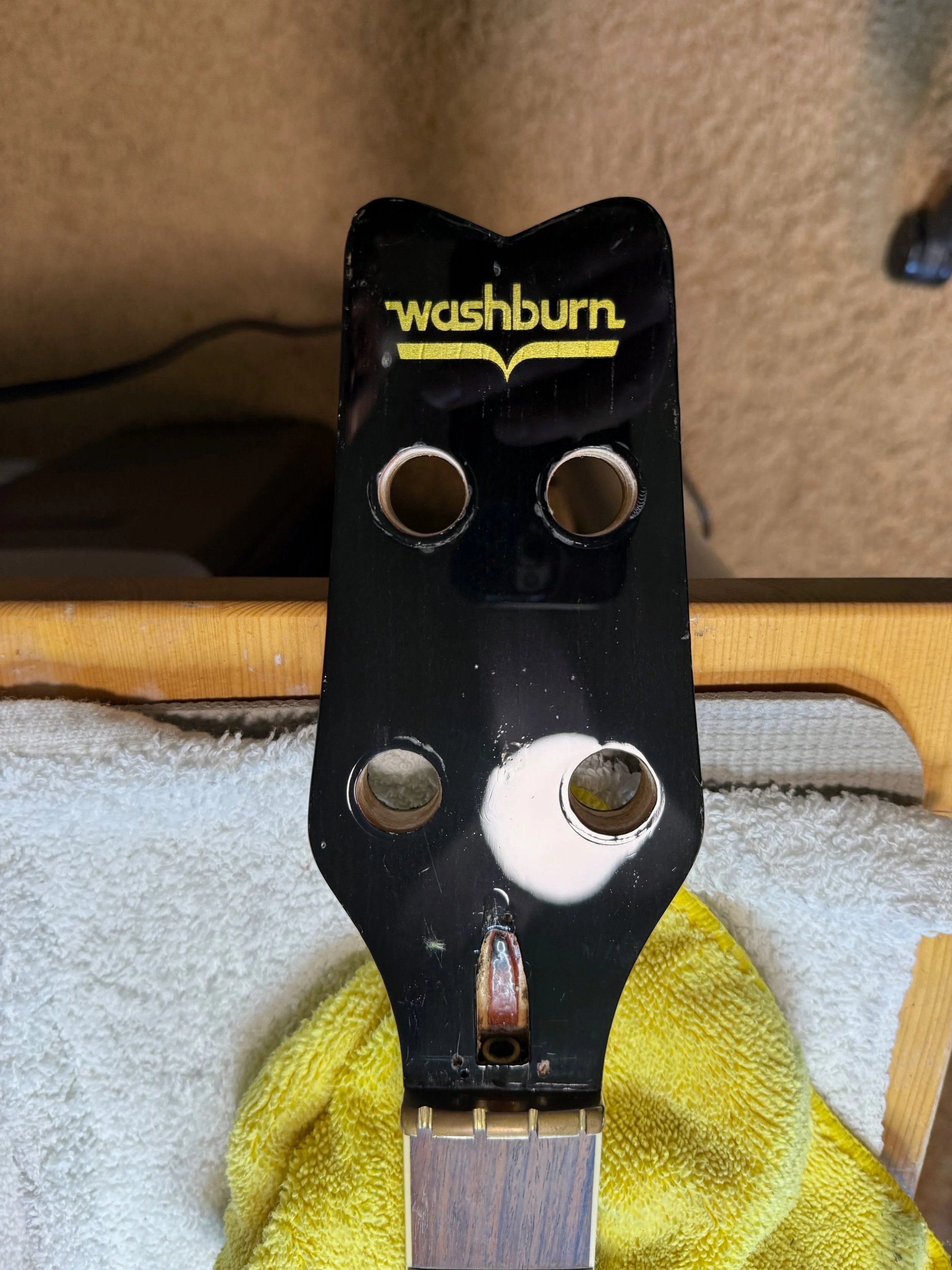
Headstock polished after filling in holes from the wrong truss rod cover
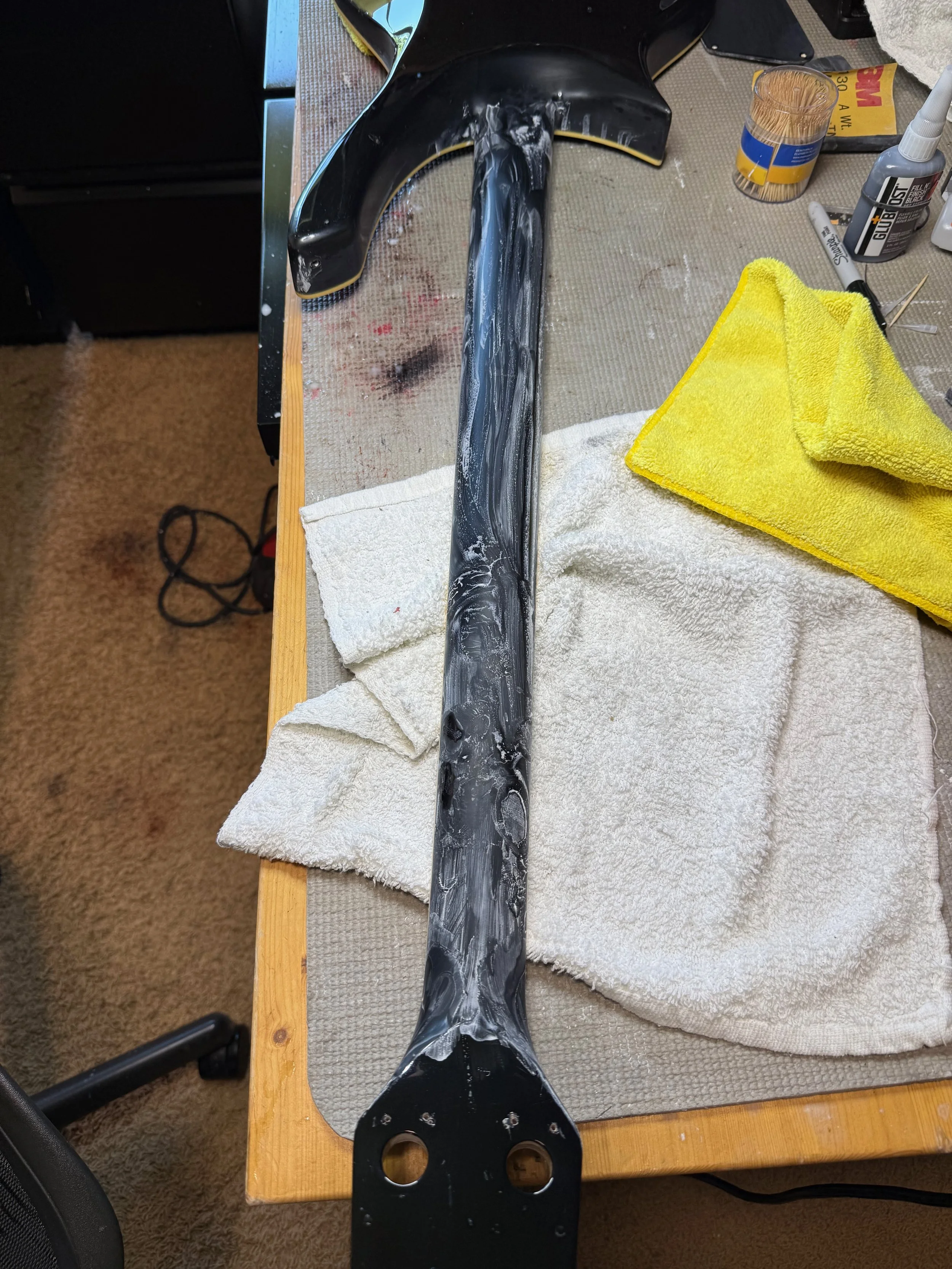
Blemishes on the neck filled with GluBoost and wet sanding
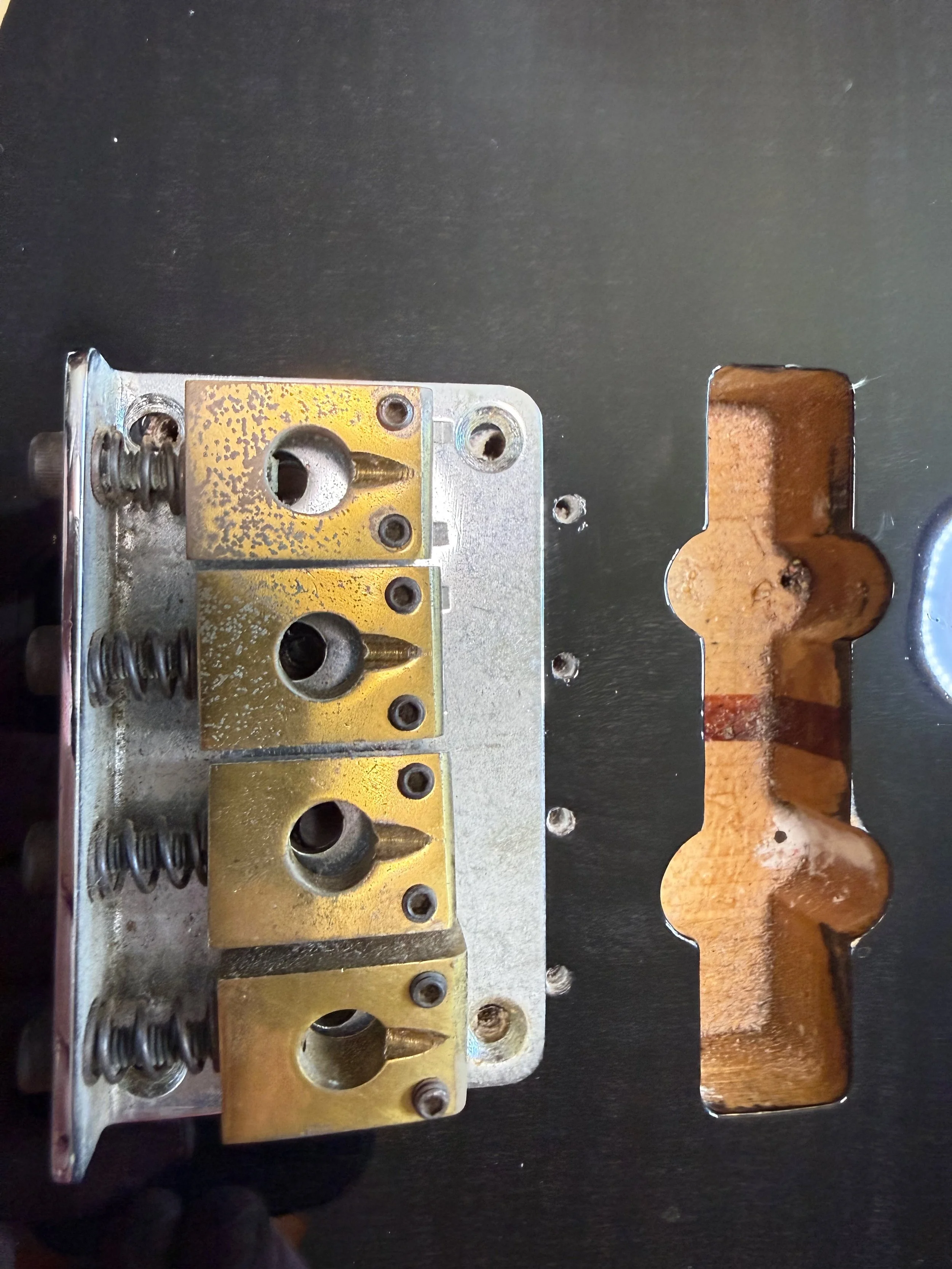
Holes present for both types of bridge
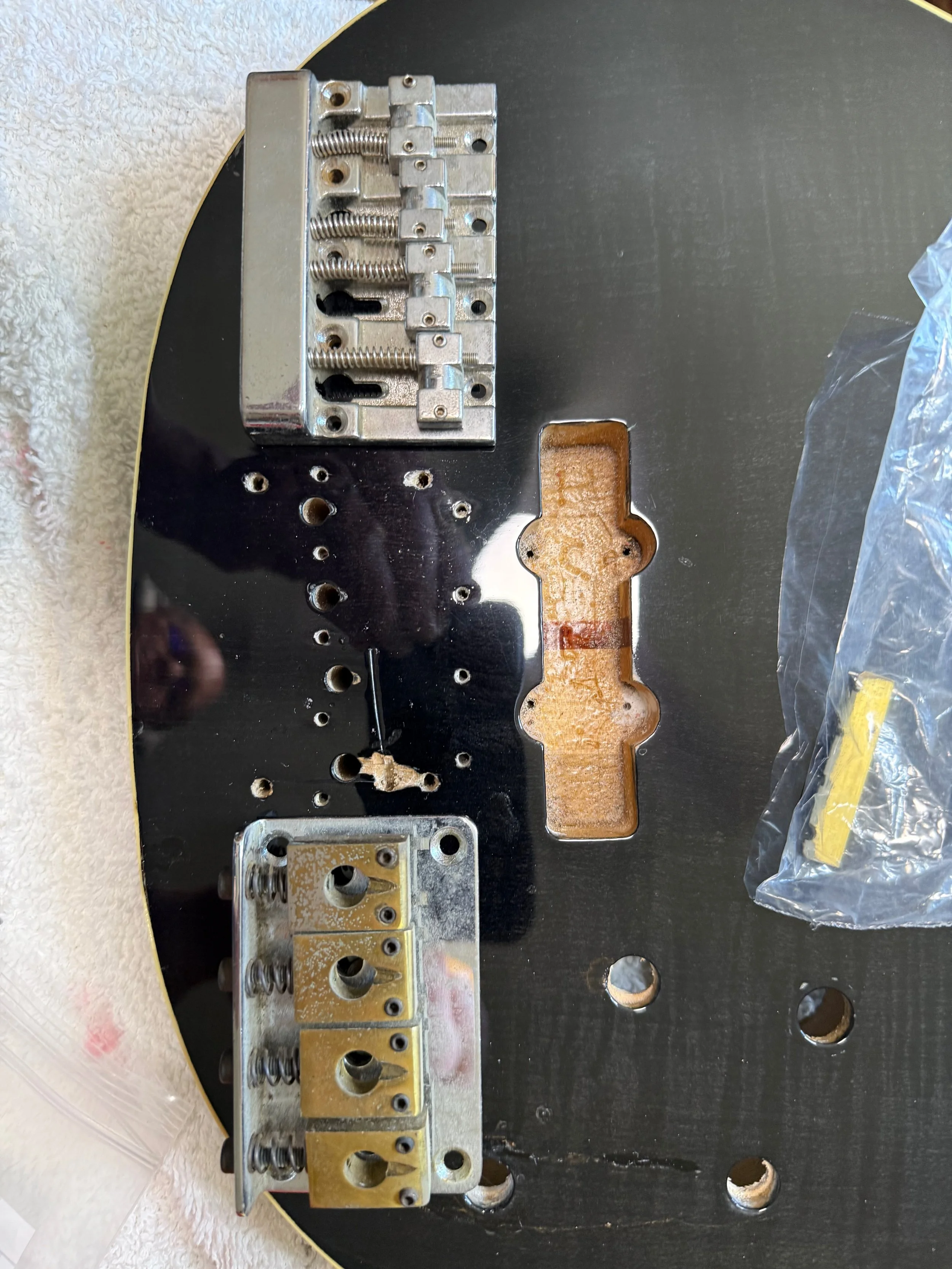
Side by side of bridges and hole patterns
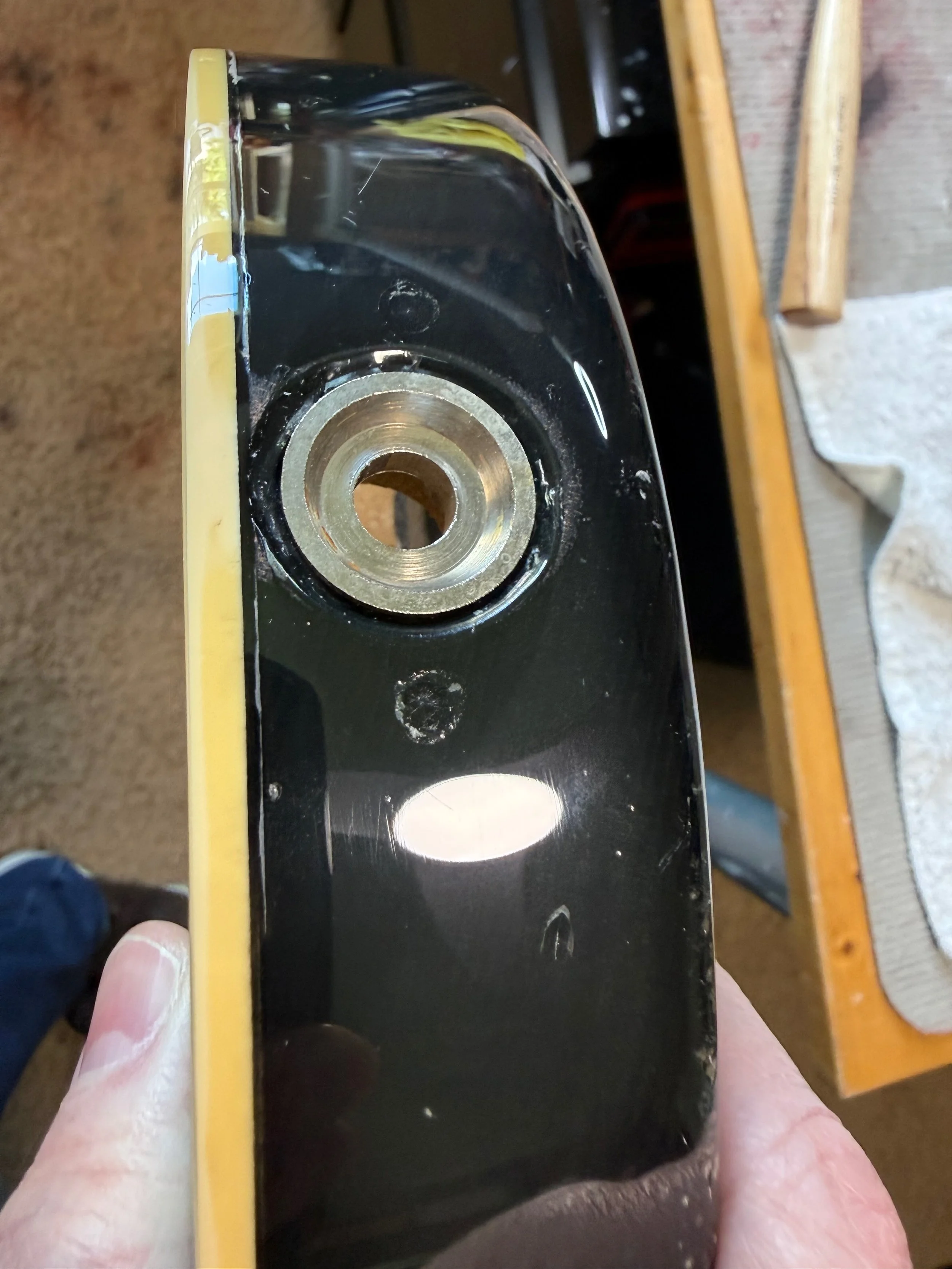
Correct input jack fitted and extra holes filled
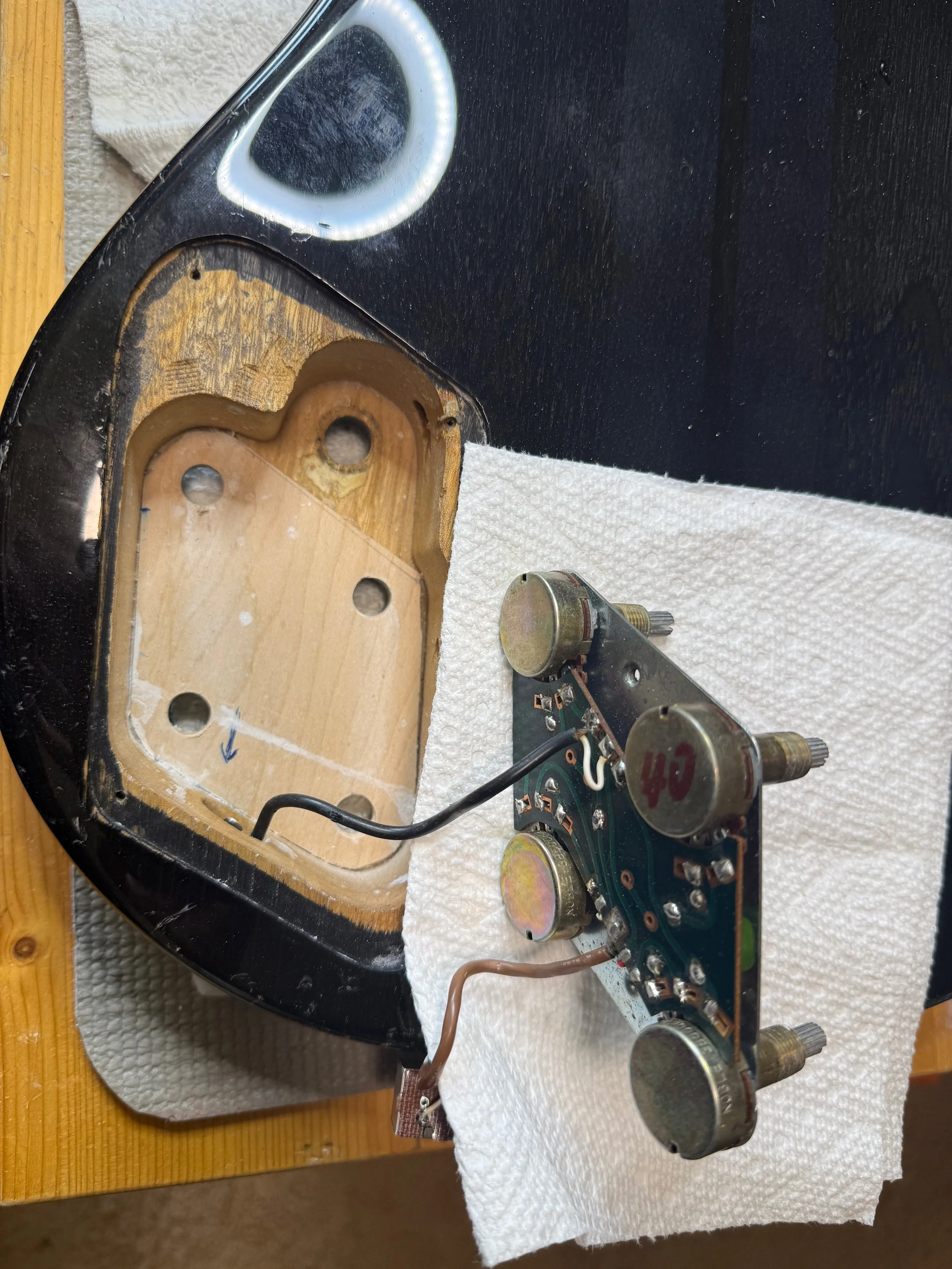
Electronics going back in
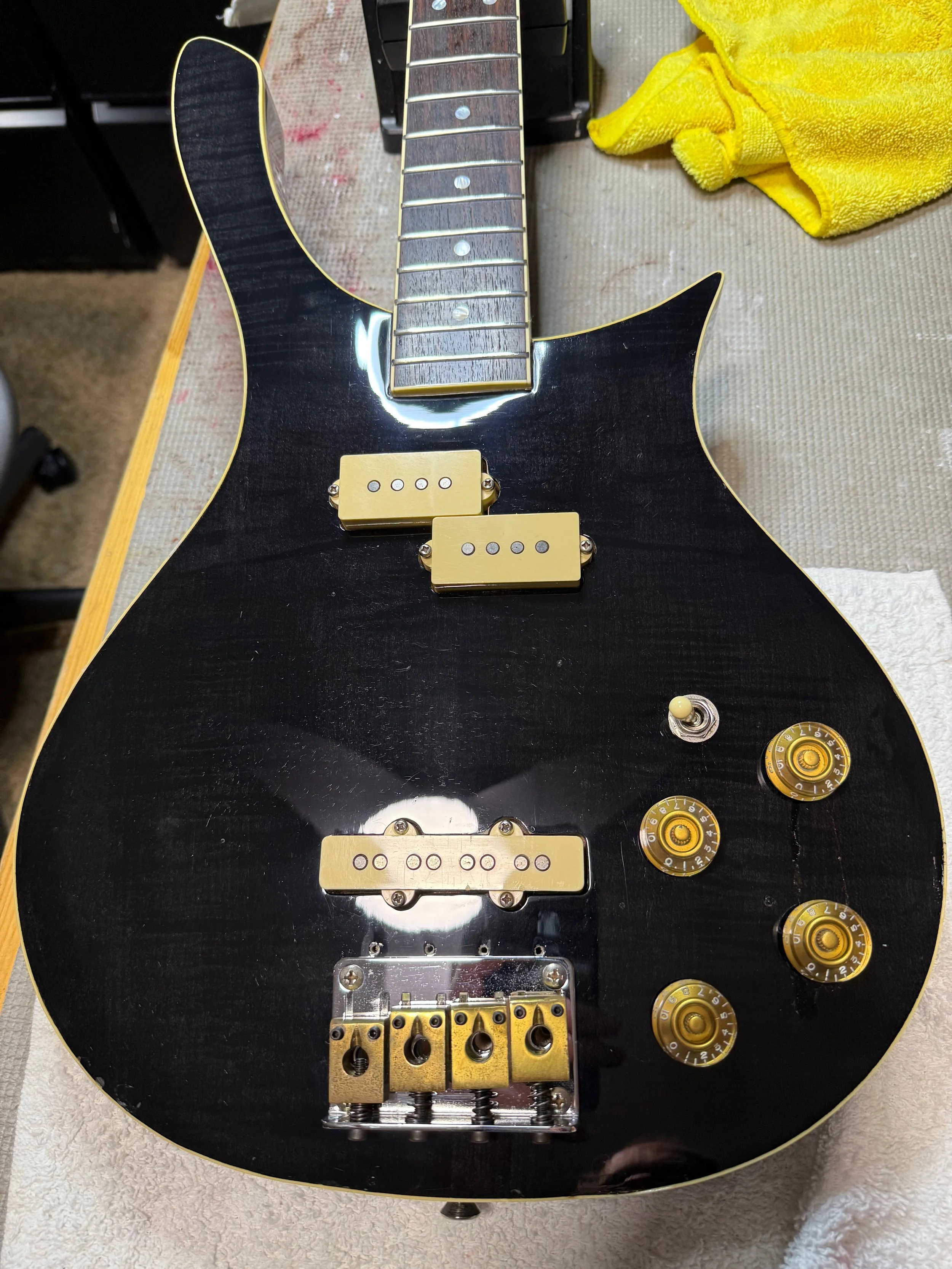
Pickups, bridge, knobs, and electronics back in
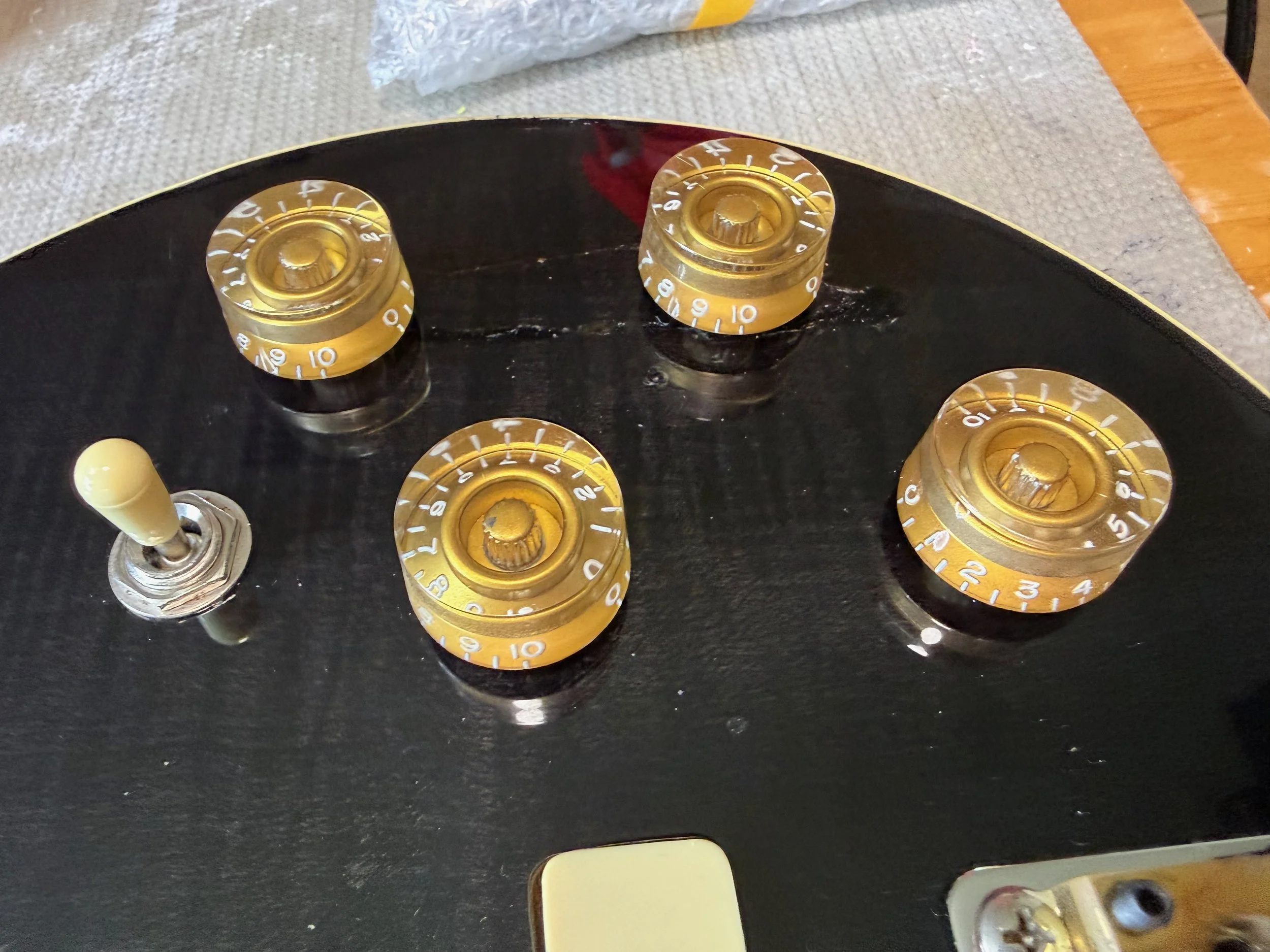
Scar still visible, but stable and polished
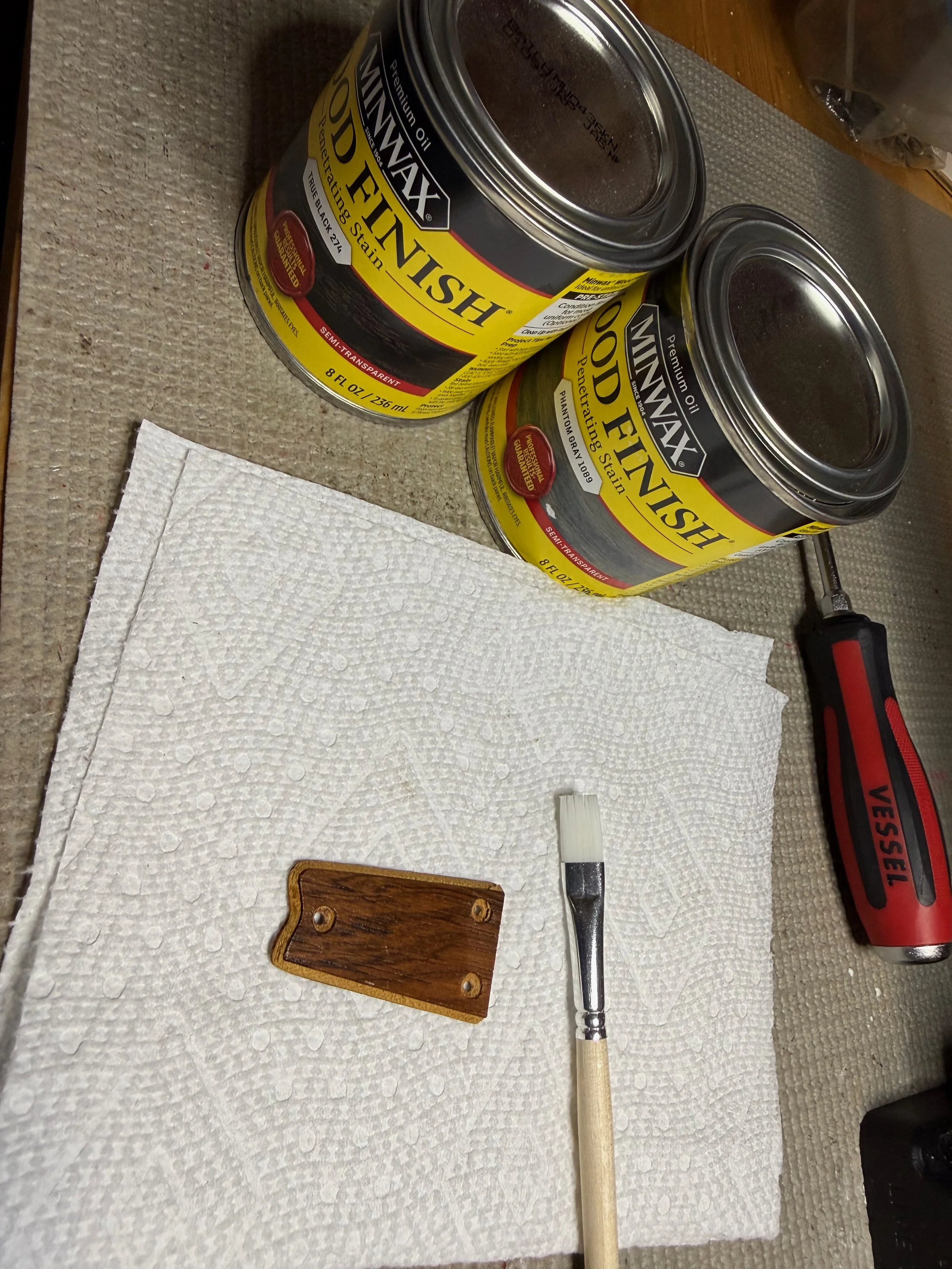
Final touches - trying to get the wood truss cover darker with some stain
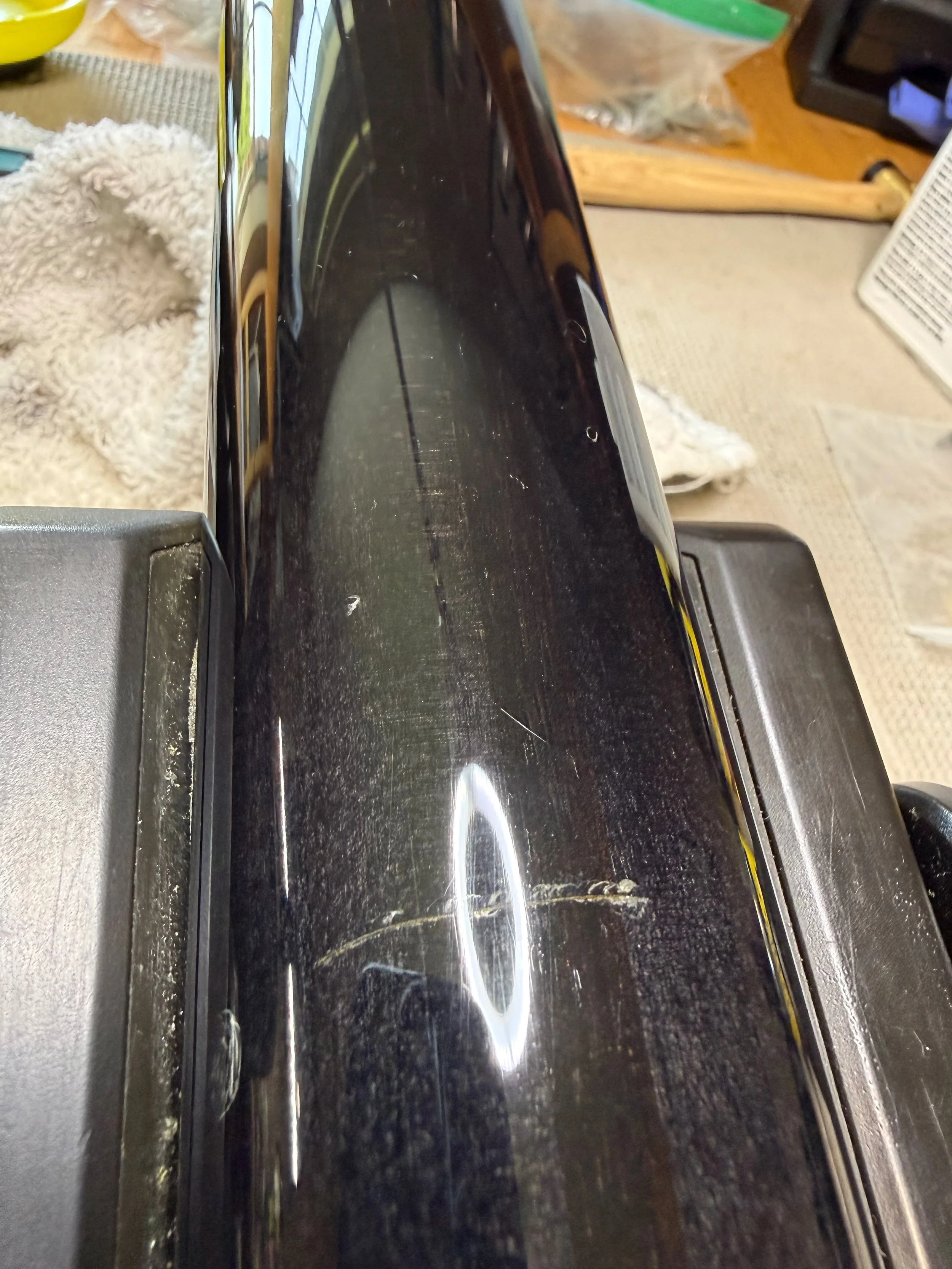
The gouge is filled and sanded. Though visible, you can't feel a thing
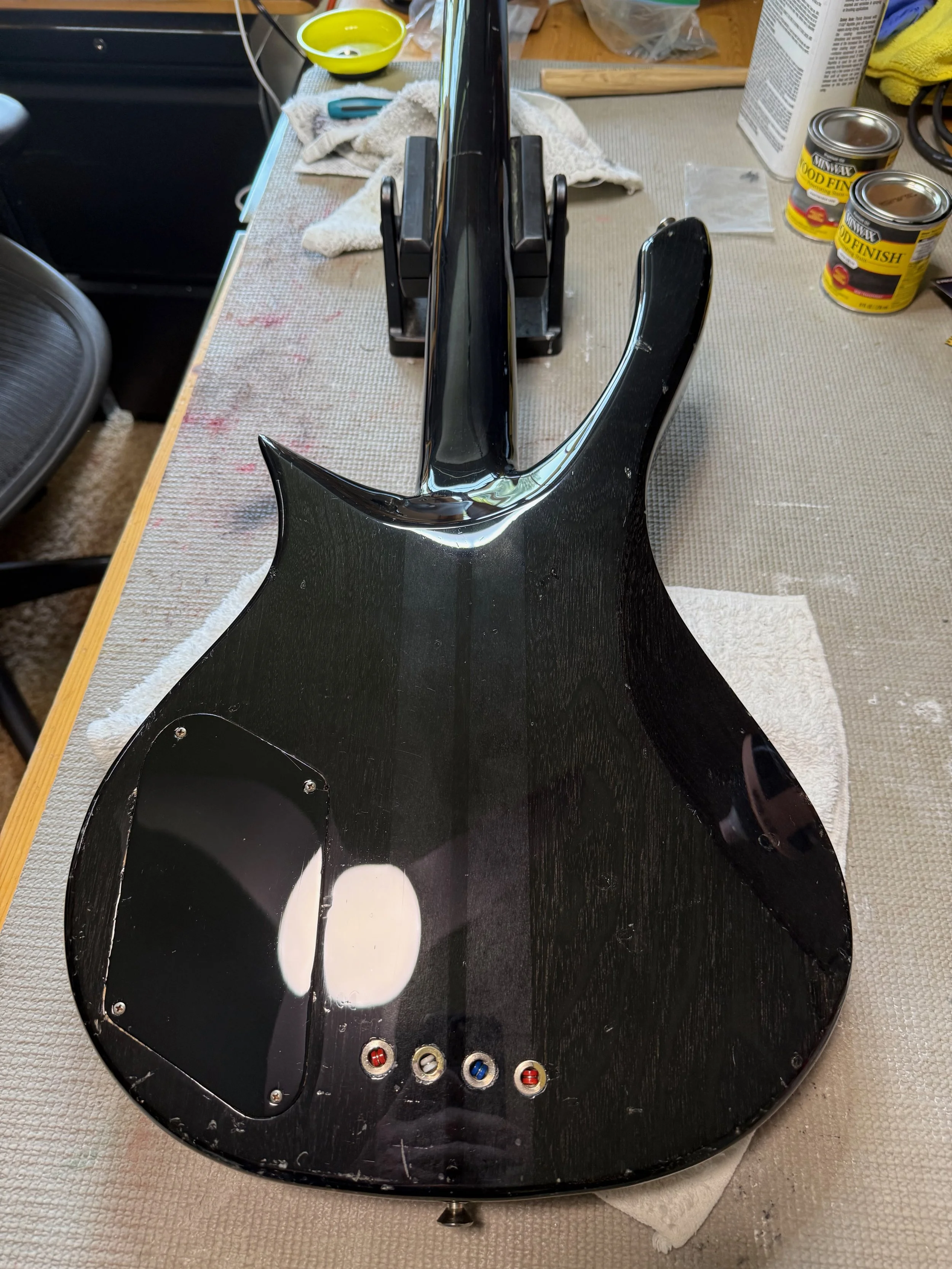
Control cover back on - it's come a long way!
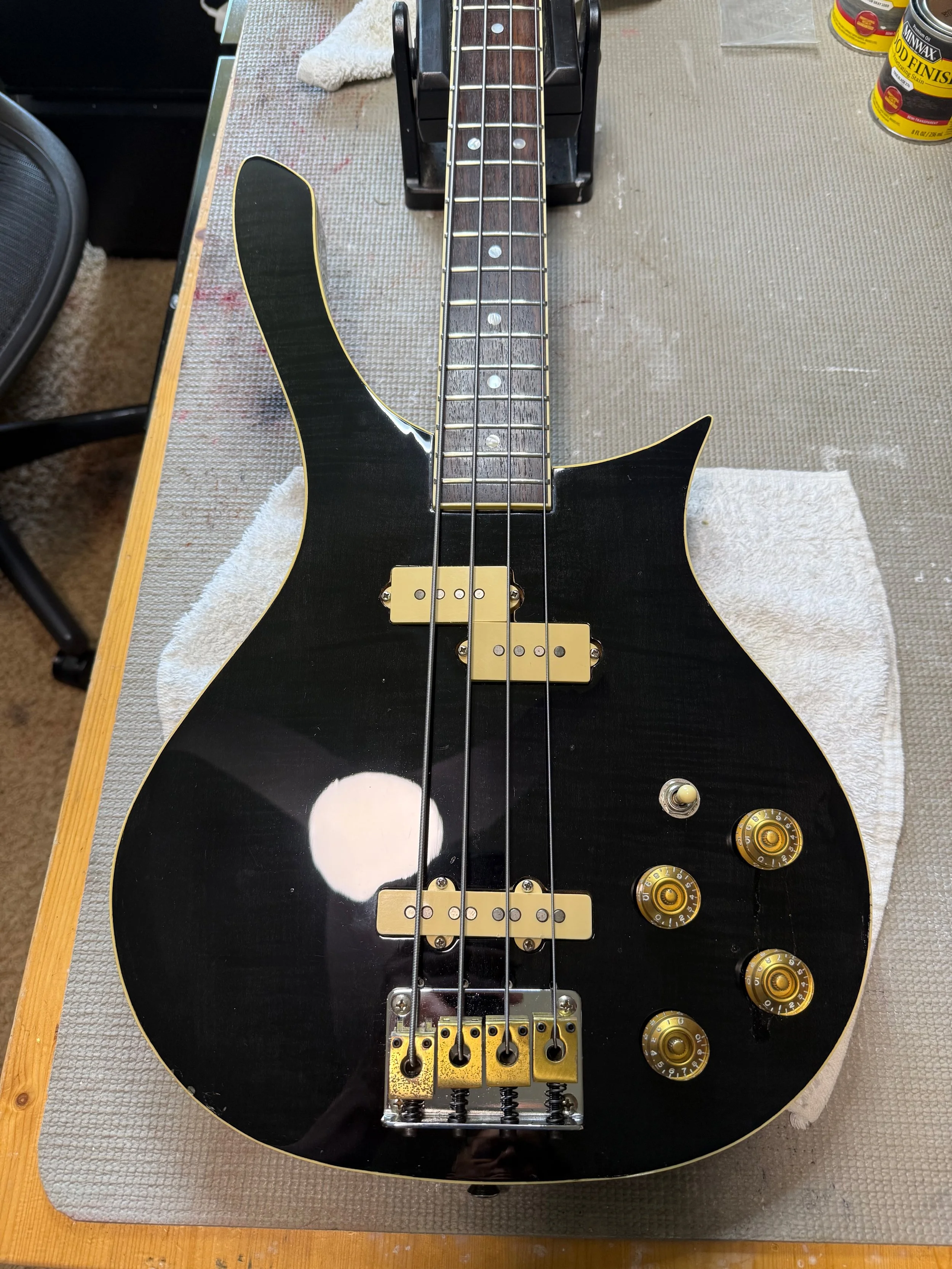
All setup and ready to play!
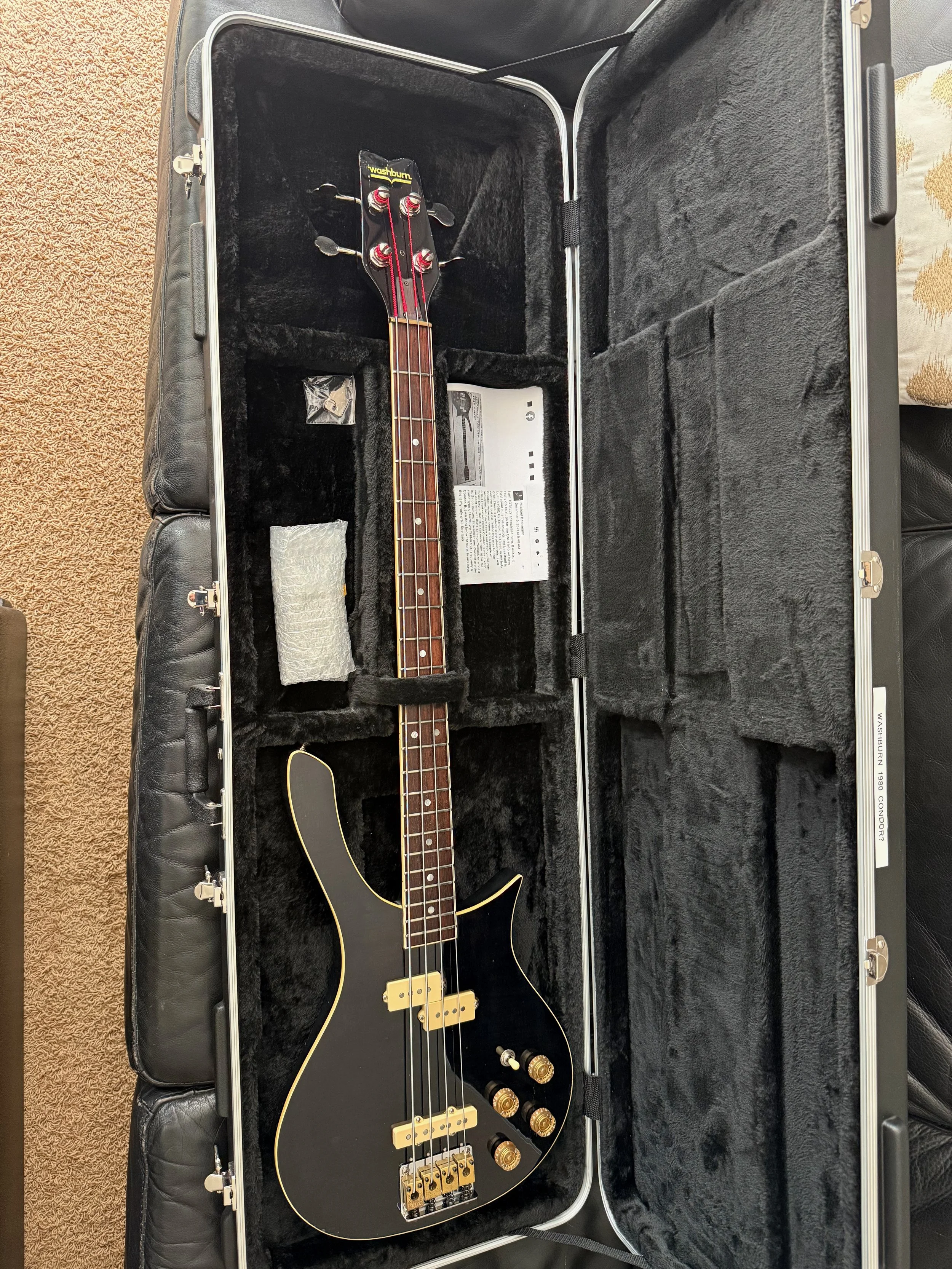
A new hard case is its new home
SB-50 Condor (B) Black
Serial #801667